Showing posts with label National Center for Victims of Crime. Show all posts

Friday, December 14, 2012

Victim Impact Statements: Isn’t it Time for a Little Creativity and Personalization?


by Donna R. Gore, M.A.

Typical Sample [Compliments of crimevictimservicecenter.org – Kennewick, WA]

The crime committed against me by John Doe has hurt me in so many ways that I don’t know where to begin.

My friends and co-workers have mentioned to me that my demeanor and behavior has changed at work and during social activities. I am currently experiencing flashbacks of the event and suffer from nightmares and lack of sleep. I constantly replay the day of the crime over and over in my head. I had to describe the day of the crime to the detective, then to the prosecuting attorney, then to the defense attorney, and to an investigator. Having to repeat the events of the incident over and over again was stressful and tried my patience. It became harder and harder to answer their questions or even tell my story again. I had to miss work, show up to work late, and leave work early due to the stress I was experiencing. I am in counseling because I am stressed, anxious, hypersensitive, and have suicidal thoughts. I wish this had never happened and I want it over as soon as possible, but I know my paranoia will never go away.

This crime has hurt my family too. My mother also suffers from insomnia and anxiety due to the crime. We live in a small town and everyone has heard about the crime. My father almost lost his job because he has had to attend court with me. I can’t escape the questions from friends of the family. Naturally, everyone is concerned for my family and me, but not being able to escape the incident kills me. It is just another constant reminder that John Doe committed a crime against my family and me.

I have friends telling me that they ran into John Doe and that she/he says they’re sorry. I wish she/he would stop communicating to me through our mutual friends. When I hear that people have run into her/him my heart races, I have shortness of breath, and start to feel dizzy.

I’m constantly asking God why? Why me, why my family? What did I do to deserve this?

I’m worried what John Doe might do after she/he gets out. I want her/him to get help because this isn’t the first time this crime has been committed and that she/he’d been sorry. I don’t want John Doe to hurt me or anyone else. I want to be protected from John Doe forever.


...end...

In 1987, Ladyjustice’s victim impact statement would not have won the Pulitzer Prize for journalism….But, it was from the heart. Looking back now, I could have crafted something different…if the emotions hadn’t gotten in the way. And that is the point. Having emotions interjected into the narrative and/or verbal presentation is a double-edged sword… On the one hand, the judge, the attorneys, the defendant and the families need to hear the emotion to understand and to validate the tremendously negative changes in their quality of life and the realities of the situation in terms of the human toll.

On the other hand, emotion can overtake the speaker, especially when in very close proximity to the defendant. As a survivor, you want your day in court. It’s your special time to relate just how devastating the entire experience has been.

Currently in Connecticut, Victim Services open approximately 13,000 new cases annually, assist 14,000 with victim impact statements and accompany over 15,000 victims to court.

In 1987, six years after the murder, Ladyjustice and her mother each took turns and related individual impact statements directly to the presiding judge. Some people choose to “challenge” the defendant to make eye contact in an attempt to “show immediate respect.” Fat chance! This blogger didn’t even bother with that request!

Rather, I was mentally focused on how not to relinquish power to this serial murderer; not to give in to fear of retaliation; not to feel that you must look over your shoulder the rest of your life if you say this or that for fear of triggering a response… One cannot live life in fear, no matter what has been taken away! For if you do, the perpetrator has won.

He has the power!

Internet research revealed minimal information or samples of victim impact statements for general public consumption. There are no standard templates. However, the most basic of guidelines furnished by the Crime Victim Services Center in Washington State recommend discussion of the following general topics: ‘With a couple of my suggestions thrown in…

1) How the perpetrator’s criminal behavior has effected the victim(s) physically, emotionally and financially;

2) Discuss any concerns regarding personal safety and security;

3) “Provide suggestions for a resolution that is fair, that will give the offender the opportunity to take responsibility for actions that caused loss or harm.”

[ Surely you jest if you are talking about felony charges. Taking responsibility – What’s that? And…. how do you spell pre-determined plea bargain?? ]

More specifically, other factors to contemplate when composing your impact statement –

1) How have your feelings changed about life in general, your lifestyle; your ability to relate to others, your ability to cope and need for support or counseling?

2) If you have sustained physical injuries, what were they and how long did they last? Are they continuing? How have your injuries impacted your ability to perform everyday tasks and recreational activities?

The “Aftermath” Questions

What about your ability to:

1) Maintain your general health;

2) Eat, sleep, concentrate;

3) Have other ailments “appeared out of the blue?”

4) Have your relationships with family members, co-workers and “society in general” changed?

5) Are you unable to trust others now?

6) Do you feel a sense of intimacy with your significant other?

7) What changes have occurred with your employer? Are they flexible in allowing you to attend court appearances, counseling and medical appointments?

8) What is your financial status currently?

9) Are you able to be productive?

10) Do you have hope for the future?

The above list is certainly not all inclusive…but rather covers the general landscape.

A Word of Two from …..The National Center for Victims of Crime

In addition, results of the National Center for Victims of Crime’s public opinion poll also revealed that 55% of Americans feel that sentences handed down to criminals by the court are too lenient.

Perhaps this is why seven out of 10 Americans believe that it is very important for the judicial system to provide victims and their families with “…an opportunity to make a statement prior to the sentencing of the offender about how the crime has affected them.”

In essence, for the court to impose fair and just sentences, it is critical that information be provided to the sentencing and paroling authorities on the emotional, financial and physical impact of crime – information that only victims can accurately define and provide through the use of victim impact statements.

Clearly the criminal justice system is ready, as is the American public, for the permanent infusion of victim impact statements into the justice process. We must now make the use of victim impact statements functional and consistent within the criminal justice system.

Comprehensive guidelines, protocol and model victim impact statement instruments must be drafted that address the needs of both the justice system and the victim. Victims must be systematically and consistently made aware of their right to submit victim impact statements and the statement’s application within the system. To accomplish this goal, each criminal justice agency that has contact with crime victims must have comprehensive agency guidelines and protocol that outline the roles and responsibilities of each staff member in the notification, distribution, collection and application of the victim impact statements.

Making a Case for Specialized Victim Impact Statements

Approximately a year ago, this author had a “brainstorming” idea to offer a service to future victims of crime regarding the creation of individually tailored victim impact statements for the following reasons:

1) Not everyone is a wordsmith nor are they able to express their thoughts and feelings in writing (even before the crime occurred);

2) The emotional impact of the experience including recounting the events, facing the defendant and his supporters, the finality of the process; the outcome of the verdict; the absence of their loved one. can incapacitate a victim and not allow him or her to complete their presentation. [ Of course there are options such as mailing letters to the judge, allowing another relative or the prosecutor to read etc…. However, it is sometimes a poor substitute and the impact may not be experienced in the same way]

3) If the victim is capable of sharing his/her private thoughts and feelings with an Advocate who is also a skilled writer, the burden is lessened. If such a writer were to create a series of questions specifically designed to elicit information to portray the deceased person in a way that honors them and is meaningful to the family… How Wonderful!

4) The possibility of a videotaped presentation or a video memorial tribute could go a long way in helping the judge to understand the enormity of their loss.

Currently no specific companies specializing in videotaped victim impact statements could be located via internet search. What a shame….

The problem.. and the beauty of this idea is that people are not “one size fits all” and therefore victim impact statements should not be mass produced as in a “sausage factory.” They are too personal…too important.

The words potentially have the power to alter sentencing!

But, who would provide the service? Who would fund it? Who would keep track of the data comparing customized statements to those that are essentially “fill in the blank essays”? Could this idea come to fruition? Why not?

Heed the advice of the National Center for Victims of Crime. Do not let victim impact statements become an afterthought!

I welcome other input concerning this idea. Until then, Thorence Brey features a series of videotaped Victim Impact Statements for your viewing interest at:

http://www.dailymotion.com/video/xkikdy_victim-impact-statements-thorance-brey_news


To read more about Donna R. Gore and learn more about "LadyJustice," refer to her website: www.donnagore.com Donna is the host of SHATTERED LIVES each Saturday at 5ET.


Thursday, June 2, 2011

"Remembering Friends and Family Who Have Gone On"


By Neil Schori

We don't always take time out of our Sunday morning gatherings at my church to honor specific holidays, but we did this past weekend for Memorial Day.  We remembered the sacrifice that many men and women made on our behalf so that we could live in the glorious freedom that we all appreciate here in the United States of America.  Remembering is important, isn't it?  In college for me, it was trying to remember that drinking too much was a bad idea.  Unfortunately, my memory was pretty short back then.  Thankfully, it's a lot better now.

On Memorial Day, my wife's Uncle Bret wrote this on his Facebook wall: "Remembering friends and family who have gone on."  Isn't that simply beautiful?  I don't do that enough because most of the time I'm just trying to keep up with "now."  How about you?  Do you take time to remember the people who have shaped your life?  Do you slow down enough in your fast-paced environment to allow yourself to process things and to actually feel your emotions?  Maybe you need to take a moment to do that right now.

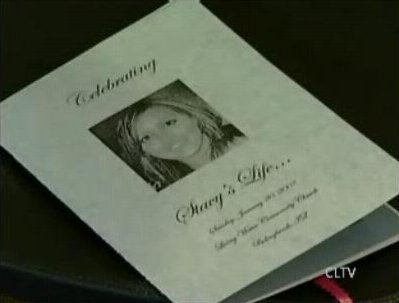
While it is no longer Memorial Day, I still want to take a moment today to remember victims of intimate partner homicide.  I encourage you to do the same.  I thank God that I had the privilege of meeting Stacy Peterson.  She inadvertently directed me toward a path that has given greater definition and an even larger sense of purpose to my life.  Because of Stacy Peterson, my eyes and heart have been forever opened to women who suffer at the hands of the men who should care for them the very most. 

When I think about Stacy and her story, I don't only remember her.  I also think of the countless women out there whom have not yet broken out of their personal darkness.  I hope that today, as you live your life and try to keep motivated through the mundane that you'll also take time to remember.  Martin Luther King, Jr. once wrote: "Injustice anywhere is a threat to justice everywhere."  As I remember victims of intimate partner homicide today, I take what Dr. King said very seriously.  I will continue to pray for justice for Stacy and fight for justice for women everywhere.  You are not alone.

Peace,

Neil

Neil Schori is Pastor of Naperville Christian Church.  You can follow him on his website www.neilschori.com

Thursday, January 6, 2011

Stalking and Teens: How Dangerous Is It Really?


 By Susie Kroll

Doesn’t it seem like everywhere we turn there are stories about stalking?  Numerous celebrities are or have been stalked by some crazy person.  So, it must only happen to famous people, right?  Let us not forget that the media’s portrayal of these stalkers is less than accurate for the rest of society.  What I mean is we’ve seen the mug shots on TV or in magazines.  Or we have heard the reports of sample communications between the stalker and victim.  Usually they are full of misspellings, crazy ideas, and the pictures of the stalkers usually consist of wild hair, orange jail jumpsuits, and strange eyes.

If I were a teen being exposed to this, I would assume a few things.  One, that stalking happens to people other than little ol’ me.  Two, the victim has to be rich, famous, or in the media’s spotlight for one reason or another.  Three, the victim has to be one of the “beautiful people” that everyone wants to know or be like.  Four, stalkers are strangers to the victim.  Finally, all stalkers have to be missing a few screws, nuts, crazy, maybe a little off balance, in other words mentally ill.

What do I have to say to that? Wrong, wrong, wrong, wrong.  According to the Stalking Resource Center, annually 3.4 million people are victims of stalking.  Even though all 50 states and the District of Columbia, and most US territories have laws against stalking, only 37% of male stalking victims and 41% of female stalking victims report these events to law enforcement.  In addition, the Stalking Resource Center reports that 75% of all victims know their stalkers.  Of that percentage, 30% are former or current intimate partners or spouses.   Finally, the Stalking Resource Center states that while some cases of stalking involve a stalker that is mentally ill, there is no evidence that all stalkers are mentally ill. 

The Webster’s New World Law definition of stalking is: A form of harassment generally comprised of repeated persistent following with no legitimate reason and with the intention of harming, or so as to arouse anxiety or fear of harm in the person being followed. Stalking may also take the form of harassing telephone calls, computer communications, letter-writing, etc. See also cyber-stalking and harassment.

Stalking can have serious repercussions for the victim including changing jobs, residence, phone numbers, daily routines, and even their identities, in order to protect themselves.   In this day and age, stalking has a new method of mayhem, technology.  Caller ID, cell phones, GPS, website histories, emails, public record searches, and social networking are just a few of the new ways someone can keep tabs on you. 

For Teens, stalking takes on a whole new dimension.  While an adult being stalked can feel like a prisoner, they have certain freedoms teens aren’t usually afforded.  An adult’s stalker may not work at the same place they do nor do they hang out at the same place as the victim for 8 straight hours or more on a daily basis.  Since 75% of all victims know their stalkers it is safe to say that most teens also know their stalkers.  Where do teens spend most of their time 5 days a week? School.  Where do they know most of the people in their lives from? School.  The next likely conclusion, their stalkers also go to school with them.  Now, can a teen leave school at any time, change schools easily, or exert the type of control over their environment that an adult can?  Not likely. 

There in is the new dimension of stalking for teens.  Stalking for teens is more easily concealed from adults not just because teens are less likely to report but also because their stalkers blend easier, as they have to be at school also.  Combine this with the fact that the victim and stalker also may be in certain classes together and you have an intense pressure situation.  Then, in comes the technology.  Stalkers have texting, caller ID, GPS, and social networking, in addition to the rumor mill to keep tabs on their victim.  Friends can inadvertently pass along information to the stalker by just taking what they did over the weekend with the victim.  Or the stalker can see what is going on by viewing Facebook or MySpace pages.  This is especially easy if the victim does not know how to best secure their pages from prying eyes.  Even more scary, is even if someone’s page is totally secure and only viewable by their friends there is still a danger of access.

 Consider this scenario:  Jill and Dan were dating for 6 months before she broke up with him.  Dan is upset about the break-up and he just won’t leave Jill alone.  He shows up at her soccer practice, has 3 classes and lunch with her, and also rides the same bus home.  Dan repeatedly texts and calls Jill.  Jill and Dan have friends in common, friends like Ann and Jake.  Even though Jill un-friended and blocked Dan after the break-up she didn’t un-friend Ann or Jake.  Jake and Dan are hanging out at Jake’s place after school and Jake is not aware of Dan’s stalking.  So, Dan takes advantage of this by asking Jake about his Facebook account.  With some clever conversation, Dan is able to see Jill’s page again by viewing it through Jake’s account.  Now he knows what Jill is saying to people, where she is going, and possibly if she is interested in or seeing someone new.

So what is a teen to do?  Teens need to be made aware of the dangers of stalking via technological advancements and social networking sites.  They also need to feel like they can talk to a trusted adult without fear of having their issues minimized because they are, after all, “only teens”.  Stalking is a serious topic that has serious consequences.  Stalkers don’t often give up if ignored.  In fact, the direct opposite occurs.  Over time, the stalker’s behavior can escalate and become even more threatening.  It may feel nice, at first to have someone pay so much attention to you but it is never okay to stalk.  Seemingly innocent infatuation can be legally considered stalking and quickly become dangerous. 

As parents, trusted adults, advocates, and caregivers, we can become educated about stalking.  We can learn the ins and outs of it and what the legality is in the state we reside in.  We can teach our teens about the differences between innocent infatuation and a dangerous situation.  We can listen when a teen talks to us about what is happening and take it seriously.  We can educate ourselves and our teens about technology and how to safeguard ourselves.  If the idea of technology is scary, have your teen teach you.  It is a great way to open up a dialog and make sure they know how to keep safe.
Together we can end stalking by teaching our teens and we may even save their lives.

All of these statistics and additional information can be found at the National Center for Victims of Crime’s website, www.ncvc.org.   For more information about Susie Kroll and Teen Dating Violence visit www.susiekroll.com
Related Posts Plugin for WordPress, Blogger...

Disclaimer

The opinions and information expressed in the individual posts do not necessarily reflect the opinions of each contributor of "Time's Up!" nor the opinion of the blog owner and administrator. The comments are the opinion and property of the individuals who leave them on the posts and do not express the opinion of the authors, contributors or the blog owner and administrator.