Showing posts with label Dennis Griffins Posts. Show all posts

Friday, July 15, 2011

The Casey Anthony Trial: Final Thoughts


By Dennis Griffin

Slightly over three years after her death, Caylee Anthony had her chance to get justice, to have the person complicit in her death held accountable.

But on July 5, 2011, in a courtroom in Orlando, Florida, the justice system failed Caylee in my opinion.
To be fair, I have to make an admission. After the story of Caylee’s disappearance broke in July 2008, and during the next several months as Casey’s falsehoods and bizarre behavior were exposed night after night on the cable shows, I came to despise her as a person. Her seemingly never ending lies, her failure to cooperate with police by giving them an honest account as to the circumstances under which she had last seen her daughter, and stealing from friends and her own family, were all contributing factors in my anti-Casey attitude.

And during that same time frame I learned a lot about the rest of the Anthonys and developed a dislike for them as well. Cindy was at the top of my list, followed by George and then Lee.

So as the trial began, Casey was guilty in my mind. For me, the burden had shifted from the prosecution proving guilt to the defense proving innocence. And in order for them to convince me, they’d have to address three facts in the case:
  • Caylee Anthony was dead;
  • Casey Anthony was the last person known to have had custody of Caylee; and
  • Casey had refused from July 15, 2008 to the present day to provide an honest explanation as to what happened to her daughter on or about June 16, 2008.


Obviously the fact that Caylee was dead couldn’t be changed. But the other two could. Casey, directly or through her lawyers, could place a live Caylee in someone else’s hands and explain who that person was and why or how he/she gained control of the little girl.

I promised myself that I’d listen as long as the evidence was credible. It couldn’t be another version of the Zanny the Nanny story. And it certainly couldn’t just be Casey’s word or that of her lawyers. That was my mindset as testimony began.

Jose Baez actually addressed those issues in his opening statement when he announced that Caylee had never really been missing. She died as the result of an accidental drowning in the family pool on June 16, 2008, when only Casey and George were present.

He further said that Casey and her father entered into a conspiracy to cover up the accident and that Casey’s ability to act as though nothing was wrong was the result of George having sexually abused her from the time she was eight years old.

And then Baez added yet another villain to the mix in the form of meter reader Roy Kronk, the man who reported finding Caylee’s remains in August and again in December, 2008. According to Baez, Kronk was a morally bankrupt individual who had somehow gained control of Caylee’s remains. He planted them at the location they were found in an attempt to collect reward money.

To me, this was a trial about Caylee’s death and Casey’s involvement in it. In that regard, whether George was an abuser or not didn’t concern me. What George and Kronk did or didn’t do were peripheral issues that could be addressed after the death itself was resolved.

So my focus was on who was with Caylee when she died and under what circumstances. In order for me to change my mind about Casey’s guilt, Baez had to produce credible evidence to support his claim of an accidental drowning. I looked forward to the defense presentation, wondering what proof he’d present, who his witnesses would be, and whether prosecutors would be able to impeach them.   

But the defense’s case came and went without providing any evidence to show there was an accidental drowning. My opinion was unchanged. It was clear to me that Casey Anthony was complicit in her daughter’s death. As the trial wrapped up I had doubts as to whether there would be a finding of guilt on the charge of premeditated first degree murder with a possible sentence of death. However, I felt a conviction of manslaughter was likely and would be appropriate.

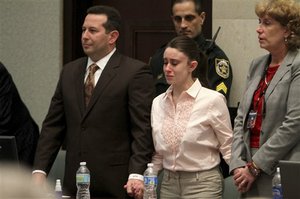
On the afternoon of July 5 as I heard the final “Not Guilty” on the death-related charges, I was surprised and disappointed. I hadn’t believed the jury would be able to reach a unanimous decision of not guilty on each and every major charge in so short a time, and without asking a single question of the judge or requesting to have any testimony read back.

Almost immediately analysts and trial followers brought up comparisons between this and the OJ Simpson criminal case. Both had seemingly overwhelming evidence. And yet the prosecutors in each case apparently were unable to convince even a single juror that the defendant was guilty.

So when was the case lost? One possibility is that it happened when Baez made his drowning and sexual abuse claims during his opening. Under this theory, Baez never had any intention of calling Casey to the stand or putting on any other supporting evidence. He simply used his opening to get those ideas into the minds of the jurors. To plant the seed if you will and make the prosecution play defense. If true, what many thought was a major error on his part could actually have been a brilliant strategy.

Or maybe the jurors related better to the defense team than to the prosecutors. Jeff Ashton may have come across to them as a bully during what I thought were his skillful and highly effective cross examinations of defense witnesses. And his laughing during the closing by Baez may have turned some jurors off.

Could it be that when the jurors looked at Casey Anthony sitting only feet from them day after day, they came to see her as an innocent young mother incapable of harming her own daughter?

Or are we now in the CSI era where jurors expect every case to be solved conclusively in 40 minutes plus commercials? And is it now unacceptable for any question to remain unanswered or unproved?

The answer could be one of the above, none of them, or a combination.

The bottom line is that we may never know for sure what happened to Caylee Anthony or what took place in the minds of the jurors. The verdict is in and must be accepted.

During the closing by Jeff Ashton, he said that the defense was asking the jurors to go down a rabbit hole and accept their outrageous theories that had no basis in fact, and made no sense. And Ms. Burdick said her biggest fear was that common sense would become lost during deliberations.

In my opinion, the jury did accept the defense invitation to go down that rabbit hole into Wonderland. And when they did, they in fact left their common sense on the surface, just as Ms. Burdick feared. And in doing so they deprived Caylee Anthony of her one shot at justice.


Wednesday, June 29, 2011

Odd Circumstances Surround Jail “Suicide”


By Dennis Griffin


On February 23 1990, the Paulsboro, New Jersey police department received an anonymous phone call reporting an incident of domestic violence at 1546 South Delaware Street, the residence of 25-year-old Gerald “Jerry” Kearney and his family. When police arrived there was an argument going on between Jerry and his wife Chyrll. Although she begged the police not to arrest him, four officers removed him from the home and took him to jail. Shortly after being placed in his cell, Jerry allegedly used his T-shirt to hang himself.

Jerry grew up in a dysfunctional home and suffered abuse at the hands of his father. He and Chyrll were married on June 9, 1984. At the time of his death the couple had three children, and Chyrll was pregnant with their fourth. Jerry was excited about the pregnancy and had just received invoices and business cards for his new landscaping business.

According to his sister Kathleen Kearney, Jerry was a good, caring man who loved his family very much. But he was by no means an angel, having had numerous run-ins with the law, mainly for theft.

On the night of his death, Jerry called Kathleen and asked her to come over and babysit so he and his wife could go out. When she arrived about an hour later, she noticed tiny droplets of blood on the steps leading to the front door, and learned that Jerry had already been arrested and taken to jail.

A short time later, a police sergeant who had been one of the arresting officers came to the door. He told Kathleen and Chyrll that Jerry had an outstanding warrant for a $25 traffic ticket. Kathleen explained that all of Jerry’s warrants had been taken care of in January, when her parents put their house up as collateral to bail him out of jail. The officer said he would go back to the station and check further. Twenty minutes later he came back and said Jerry would be released as soon as the paperwork was done. Kathleen had been right, there were no outstanding warrants and they were not going to charge him in the domestic incident.

After a brief time passed the sergeant was back again. This time he was accompanied by an assistant prosecutor. They said that Jerry had hanged himself in his cell and was dead.

When Jerry was pronounced DOA at the hospital, the attending physician refused to sign the death certificate. When Jerry’s parents got to the hospital to identify his body, they were denied access. A priest, who had been called to administer last rights, was also denied access to the body.

Paulsboro is located in Gloucester County. However, the medical examiner, Dr. Claus Speth, was attending a convention in Ohio at the time and the medical examiner from Burlington County should have received the body. But for unknown reasons, the police chief placed a call to Dr. Speth and asked him to return and do Jerry’s autopsy as a personal favor. The next day Dr. Speth performed the autopsy. Afterward, he called Jerry’s parents and told them he believed Jerry had been murdered. He said he’d make a final decision after conferring with the police.

Although Jerry’s family doesn’t know for sure what happened at that meeting, they have heard that the session was recorded on an audio tape. Allegedly, one of the arresting officers stated that he’d slammed Jerry’s face into the concrete walkway. However, whatever his reasons, Dr. Speth ruled the death a suicide.

The official reports state that Jerry fell down the steps. But some witnesses say that Jerry was screaming “I’m not resisting, I’m going peacefully,” as officers dragged him down the steps by his feet, with his head bouncing off the concrete steps.

Some witnesses say they saw Jerry unconscious or possibly lifeless at the bottom of the steps. Kathleen states that the autopsy showed Jerry had two black eyes, a split lip, multiple bruises, neck injuries not consistent with a hanging, and his voice box and thyroid glands were hemorrhaged.

According to Kathleen, one of the involved officers had been fired from other police agencies for incidents involving brutality and his records were sealed after each firing. This is the same officer who allegedly told Dr. Speth that he slammed Jerry’s head into the walkway.

Of further concern to Jerry’s family, the police told them that the T-shirt Jerry used to hang himself was lost and unavailable for examination. In addition, the authorities claim the security cameras in the facility were not operational at the time of the incident.

Was Jerry Kearney’s death suicide or homicide? The family may never know for sure. 

For discussion about this case, and others where there has not been a satisfactory resolution, please visit the Crime Wire Website Forum.

Dennis Griffin is a nationally known true crime author and part of the Crime Wire Team.

Friday, June 3, 2011

The Casey Anthony Trial: Where's the Fat Lady?


 By Dennis Griffin

The long-awaited trial of Casey Anthony is finally underway. Like many others, while waiting for the court action to begin I had wondered and speculated on what the defense strategy would be. Mr. Baez seemed to put that issue to rest in his opening: Caylee Anthony drowned in the family pool on June 16, 2008 when only Casey and her father George were at home. The pair decided not to report the incident, but rather to cover it up. Although Caylee’s death was tragic, it was an accident and involved no criminal activity on the part of Casey or anyone else. How the incident was handled – or mishandled – afterward was the problem.

According to Baez, his client’s odd - and often infuriating – behavior after the fact had a reasonable explanation: Casey was in fact a victim. The Anthony family was dysfunctional. Her father George had sexually abused her starting when she was eight years old. Brother Lee even acted inappropriately with her on occasion. In that environment, young Casey was forced to become an accomplished liar in order to protect those dark family secrets. It was so bad that after performing oral sex on her father in the morning, she then had to attend school and act as though everything was normal in her life. Although Casey’s series of lies, going on the party circuit and concealing Caylee’s disappearance/death from her mother and friends may seem abnormal to most people, Baez contended that her conduct was that of a sexual abuse survivor, not a murderer.

The lawyer’s contentions took many observers aback. Even those who claimed they had seen the accident/victim defense coming said they were shocked when they heard the words actually come out of Baez’s mouth. The case was all but over, some said. The State, lacking a definitive manner of death, would not be able to convince each and every juror that Casey had acted with intent and premeditation in causing the death of her daughter, they opined. Baez had introduced reasonable doubt and Casey Anthony was well on her way to becoming a free woman.

My initial reaction was that those commentators were probably right. Surely at least one juror would want to give Casey – the alleged victim of an evil father - the benefit of the doubt. Maybe it was all over for the prosecution except for the fat lady singing.

But now, having had a few days to more closely analyze what Baez said, listen to other analysts and hear additional testimony, I’m not so sure that the defense delivered the knockout blow that some thought. I’m not on the jury. But if I were, there are some issues that bother me and that I’d want resolved before I voted not guilty. Perhaps the real jurors have some of the same concerns.

For example, I’m in no way an expert on the effects sexual abuse has on a victim. Maybe Baez’s claims about Casey’s conduct are valid, and maybe not. But I’d need to have this whole matter of Casey’s post event actions explained in more detail prior to accepting the defense argument.

In specific, Baez stated that when Casey saw her father carrying Caylee’s body from the pool area on June 16, “she cried, and cried, and cried.” I consider that to be a demonstration of emotion. Yet within a matter of hours after going through this trauma – and for the next 31 days - Casey’s friends and acquaintances have testified that she exhibited absolutely no signs of grief, distress, anger or depression. And the courtroom cameras have caught Casey crying and showing emotion in her facial expressions and gestures – such as shaking her head as she listens to testimony.

I see contradictions between Baez’s portrayal of Casey as the highly upset mother of a daughter who has just been found dead, and the happy-go-lucky party girl described by others. Can they both be true?

Baez admits that his client is a liar. In my opinion she is also a manipulator and shows or hides her emotions as fits her needs. It will take more than Baez’s words to convince me that I need to look at Casey as a victim rather than the master manipulator I believe her to be.

I also find the sexual abuse allegations troubling in this regard. It’s one thing for incidents of sexual abuse to not be reported to authorities. Unfortunately, that often happens. But if the victim – in this case Casey – has a daughter she truly loves, would she leave her alone with the abuser?

And in my opinion, the jail video recording I’ve seen of a visit between Casey and her parents doesn’t serve to support the sex abuse allegations. In that video Casey compliments George for being an excellent father, and both George and Cindy for being great grandparents to Caylee.

I need to see credible evidence indicating sexual abuse before I accept the allegations as true. Baez’s statements simply aren’t sufficient.

Opening statements are not evidence. Mr. Baez put the allegations out there. That’s fine. Creating reasonable doubt falls under his job description. If as the trial moves forward he can produce credible supporting evidence I’m willing to listen. But his claims, or any unsupported allegations made by Casey, fall far short of proof for me.

This trial has a long way to go. There will no doubt be twists and turns, conflicting statements and testimony, and experts will offer differing interpretations of the same set of facts. I make no prediction as to what the verdict will be. But I don’t think either side is in a position to put the champagne on ice just yet. The fat lady is far from ready to sing. In fact, I doubt that she’s even made her way to Orlando yet.                       

Monday, April 18, 2011

Jared Hillman: Suicide or Homicide?


Jared Hillman and son Kendall 

By Dennis Griffin

On August 9, 2009, 23-year-old Jared Hillman was found dead of a gunshot wound to his head in the woods behind his father's home in Hickory, Mississippi. A .40-caliber pistol was gripped in the young man's lifeless hand. The authorities quickly determined that Jared had taken his own life. The Army Reservist who had served in Iraq and returned home only three weeks before his death, was chalked up as one of the 309 military suicides reported last year. In addition to any possible depression over his military service, Jared was also in the process of ending a failed marriage. And that could have contributed to his desire to kill himself.

On the flip side, Jared had a powerful reason for wanting to live: Kendall, his two-year-old son from a previous relationship. He had gained temporary custody of the boy in February and was scheduled to be awarded permanent custody during an uncontested hearing the next week. According to family and friends, Jared was eagerly awaiting the court appearance and looking forward to getting on with civilian life. So there was a reason for Jared's family to have been shocked when he died, apparently by his own hand..

There were other causes for skepticism as well. And they had to do with Jared's estranged wife, Amanda. Jared and Amanda were married in May 2008, shortly before he deployed to Iraq. Upon his return home on July 19, 2009, Jared confided to his friends that while he was away Amanda began having an affair with Meridian, Mississippi police officer Derek Thomas. He said he didn't want the marriage to end, but Amanda said she wanted to be with Derek, and in fact left Jared and moved in with Thomas. Jared and Kendall took up residence with Jared's aunt, Kim Busbea.

Busbea, says that after the separation the relationship between Jared and Amanda was stormy, with frequent arguments. And Jared also had multiple confrontations with Derek Thomas, with threats being made on both sides. At one point Jared told his aunt that he suggested to Thomas that they meet somewhere and settle their differences man to man. He said he wasn't afraid of Thomas and knew how to handle himself.

Another cause of concern to Jared's family was the matter of his $400,000 life insurance policy. Joe Hillman had originally been the beneficiary. But Jared replaced him with Amanda prior to going to Iraq. Days prior to his death Jared told his aunt that he was going to remove Amanda from the policy. Was Amanda aware of that? Busbea doesn't know. But she feels it is entirely possible that during the heat of an argument Jared might have made his intentions known.

And the sequence of events on the night of Jared's death set off additional alarm bells. Jared spent the day of August 8 at his father's. He mowed the lawn, ate dinner, and got Kendall bathed and ready for bed. At some point he removed the .40-caliber pistol from his father's gun cabinet and slipped out of the house unnoticed.

At 8:22 p.m., Jared’s grandmother, Cherry Todd, answered the telephone. It was Amanda. She said, "Granny, you need to call the sheriff’s office. I was talking to Jared, and he said he was going to kill himself and I heard a click,” Mrs. Todd said Amanda told her Jared was behind his father's house.

“I just panicked,” Todd said. “I ran out in the yard to see if he would hear my voice.” She told Jared’s father, who also began searching for his son. There are more than 100 acres of thick woods behind the home, making the search a monumental task.

Mrs. Todd said Amanda called a second time 10 minutes later, again telling her to call the sheriff’s office.

The troubling question here is why didn't Amanda call 9-1-1 herself and then call the Hillman residence? If Jared's life was at stake, that would seem to have been the fastest means of getting medical and law enforcement personnel on the scene.

After Amanda's initial call, Joe Hillman and a friend began searching the woods, yelling for Jared and calling his cell phone. The sheriff's department was called and officers arrived on the scene at around 10 p.m. The search continued until about 12:30 a.m. And at dawn, dozens more family members and friends gathered to renew the hunt.

Kim Busbea said that during the break she called Amanda at 5:44 a.m. Amanda told her she had not heard anymore from Jared. Busbea said, “I asked her what was the last thing Jared had said to her, and she said, ‘He said something about having a .40-caliber pistol and wanted to know if I would take care of Kendall if something happened to him.’ ”

Around 9:30 a.m., the search ended with Busbea’s husband and others finding Jared’s body beside a tree. He had a bullet wound to the right side of his temple, and the gun was in his right hand with his finger on the trigger of the weapon.

As soon as Jared’s body was found, Busbea called Amanda and told her Jared was dead. “She really didn’t say anything,” Busbea said.

Because the family knew Jared had been speaking on his cell phone to Amanda prior to his death, they scoured the area for the phone, but couldn’t find it. And it wasn't present when the coroner emptied Jared’s pockets.

The state medical examiner's office conducted an autopsy, after which Jared's body was cremated. When his father went to the mortuary to pick up his son's belongings, the missing cell phone was mysteriously among them.

Authorities passed off the reappearance of the phone as nothing more than the coroner's failure to find it earlier. But when the family was able to obtain and examine the phone records, more questions arose.

First was a "private call" listed at 8:15 p.m. that lasted two minutes. After that, there was a series of calls answered by voice mail until another "private call" was answered at 11:13 p.m. That call was placed from Amanda's phone and lasted just under five minutes. If Amanda's earlier calls to Mrs. Todd were accurate, this call was made and answered well after Jared was dead.

Seeing that call upset Joe Hillman. "How in the hell can my son be dead and answer his cell phone?" he said. "Either he wasn't dead, or somebody else had the telephone."

Records also show there was a 5:56 p.m. call from Derek Thomas' phone to Jared that lasted 46 seconds.

Although Jared was distraught, Hillman questioned whether his son would kill himself, especially since he was going to soon have permanent custody of Kendall.

Coroner Danny Shoemaker said from everything authorities saw, Jared's death appeared to be a suicide. He said no time of death was determined. When asked about the nearly five-minute conversation that took place on Jared's phone at 11:13 p.m., he replied, "That's news to me."

In a September 19, 2010 article, The Clarion-Ledger printed an email it had acquired that Amanda had written to the Army on Oct. 14, 2009:

"Someone told me that they thought someone had sad (sic) something about his benefits. I plan to
put this aside for Kendall (his son) if there is anything, but I knew that no one has contacted me yet. ... If you have any information, it would be appreciate."

That same article reported that before the end of 2009 Amanda received $400,000 as the beneficiary of Jared's life insurance policy.

Kim Busbea adopted Kendall in June, 2010. She says that contrary to Amanda's statement in her email to the Army, Kendall has not seen a penny of that money. Over the summer she filed a lawsuit against Amanda and Derek Thomas seeking to get the insurance money for Kendall. She alleges that Kendall suffered an alienation of affection due to the affair between Amanda and Thomas.

The suit says in part:

Jared made his wife the beneficiary "with the understanding that, should he die, the insurance proceeds would be used for the care and benefit of his minor child. It is inconceivable that, given Defendant Hillman's affair, that he would want his life insurance proceeds going to (his wife) with not a penny being used for the benefit of his minor child."

In addition to Kim Busbea's lawsuit, the Mississippi Bureau of Investigation is reviewing the case. Joe Hillman said he wants authorities to thoroughly investigate and find the truth, even if they conclude his son committed suicide. "All I've ever wanted is the truth."

And that doesn't seem like too much to ask.

Wednesday, March 16, 2011

The Case of Nikki LaDue January


By Dennis Griffin

Nichole LaDue January was found dead of a gunshot wound to the head on the balcony of her third floor condo in Pass Christian, Mississippi, shortly before 10 a.m. on July 29, 2002. Rigor and lividity indicated that the 30-year-old had been dead for several hours. Her death was ruled a suicide. 

Nikki had been married for less than two years to Phil January, and both worked at the Grand Casino in Gulfport, LA. According to Nikki’s friends, Phil was a jealous and controlling husband. Her co-workers told the LaDue family that their formerly fun-loving daughter had become a loner, afraid to socialize on breaks because Phil had spies watching her. However, she did have something wonderful in her life – a five-year-old son, Zachary, from a previous marriage. She loved Zack with all her heart. At the time of her death, Nikki was at a point of transition. Phil had suddenly decided they should relocate to Bossier City, LA, where he had found a job with Boomtown Casino’s security department working under his former boss at the Grand. Nikki had stayed behind to orchestrate the move. She told Phil that on July 29 he should drive to Pass Christian, rent a U-Haul and move the family’s belongings to Bossier City. She’d have everything ready to go. Nikki and Zack would then drive to Fort Lauderdale in Nikki’s car to spend a week with the LaDues. They would then join Phil in Louisiana.

However, Nikki had a different plan known to only a few people. She believed her marriage to Phil was over and she had no intention of joining him in Louisiana. She and Zack were going to remain with her family in Florida and start a new life there.  According to friends who knew of Nikki’s plans, she seemed both exhilarated and nervous. She was excited about going to live with her parents, but she also seemed scared. She and Zack slept at a friend’s place because she was afraid to spend nights alone in the condo. She also asked a male friend to show her how to use a pistol, because she wanted to be able to protect herself. That seemed to be an odd request since Nikki was known to be terrified of guns.  On July 28, the day before Phil was to arrive with the U-Haul, Nikki apparently decided to treat herself to a preview of her new life as a single woman.

She deposited Zack with a sitter and went on a date. She and her new friend, Eric, went to a club and then to his apartment, where he introduced her to some of his friends. From there they went to a sports bar. 

Meanwhile, Phil’s calls were piling up on Nikki’s voice mail. He even placed a frantic call to one of Nikki’s friends at work to find out where Nikki was. At about 8 pm, Nikki looked at her watch and exclaimed that she had to make a call immediately. She refused to use Eric’s cell and called from a pay phone. When she returned to the table she was visibly shaken and stated she had to leave right away. That was the last time Eric saw her alive, though they did speak one final time at 12:30 am, when she called his cell phone to swear him to secrecy about their day together. Nikki collected Zack and returned to the condo.

The calls from Phil continued, eighteen in all. Phil subsequently identified those calls, made between 11 pm and 2:30 am, as a lover’s spat. He told police that he said some hurtful things to Nikki that might have caused her to search the condo for his gun so she could take her own life. Months later, the detective in charge of the case told Nikki’s family that this statement by Phil was the basis for his conclusion of suicide.

According to Nikki’s family, Phil also told police that he was a 20- year veteran of the police force in Wichita Falls, Texas. They contend that was a total lie and that Phil was never employed by any police department in Texas. When one of Nikki’s friends arrived at the condo at around 9:30 am on the 29th to help load the U-Haul, she was let in by Zack. He said his mother was sleeping in the bedroom. The friend said she searched the condo twice for Nikki, but never looked out on the balcony. Minutes later Phil arrived and discovered Nikki’s body.

Nikki’s family has questions about the police investigation and the ruling that Nikki committed suicide. They include: Phil never provided proof of his whereabouts the night of July 28, or explained why he blocked the phone records from showing where he was calling Nikki from. They believe he might have been en route to Mississippi, but it is possible that he was already there and Nikki didn’t know it;  Nikki was found in a chair with her right knee held by the table in front of her and her left leg down. Phil, the person who found her, has stated in writing, “The gun was sitting beside her on a small padded wicker stool with rod-iron railing.” However, the police photo shows the pistol on the chair, under Nikki’s left thigh. They wonder how Nikki was able to shoot herself in the temple and then place the pistol under her thigh;

On the table next to Nikki’s body was a pack of her Marlboro Medium 100’s. But they were to her left, not to the right where a right-handed person would normally place them. On the far side of the table was a pack of Marlboro Red 100’s with a lighter beside them. This second pack could indicate the presence of another person; There was also a portable phone, face down on the table, covered with blood.

A pathologist was hired to do a private autopsy and told the LaDue family that Nikki died instantly. If so, who bloodied the telephone? The police failed to collect the phone or lighter as evidence; The bullet that entered Nikki’s right temple exited through a tiny hole above her left ear. Allegedly it then hit the wall 5 feet 6 inches from the floor and 18 inches to Nikki’s left, ricocheted into the aluminum doorframe on the same wall, and then bounced back to land in a chair on the next balcony.

Police took no scene photos to document those facts. It seems strange that the exit wound was so small that three different funeral directors were unable to locate it, yet the bullet continued to travel at such a speed as to hit a wall, travel to the door frame, and have enough momentum left to fly back over Nikki’s head and land on a balcony six feet away. There is no police diagram of the path of the bullet, just a verbal description; and: would Nikki take her own life while the 5-year-old son whom she adored was in the same apartment?  Would she leave him all alone knowing he could possibly discover her body?

The family doesn’t believe she would have. For the LaDues, the questions are many, but the answers are few.

The case of Nikki LaDue January was discussed on Crime Wire Radio, Tuesday, March 15.  Her mother Bonnie was a guest.

      
Listen to internet radio with Denny Griffin on Blog Talk Radio


Sunday, February 20, 2011

Randy Wayne Leach: Still Missing


By Dennis Griffin

Randy Wayne Leach and his car, a 1985 gray Dodge 600, disappeared from Linwood, Kansas on the night of April 15/16, 1988, following a pre-graduation party at the home of Kim Erwin in rural Linwood. He was 17 years old.

According to his family, Randy, an only child, wasn’t selfish or self-centered. He was always willing to help others and do what he could for neighbors, friends and family. He was an upbeat, clean-cut and normal boy.
Although Randy never acted like he cared for school, his grades didn’t show it. He was always an honor student, or honorable mention as a B-student. He never had to study much to keep up.

His senior year could have been finished with an early out in January, but his parents, Harold and Alberta, talked to him and he decided to enjoy his last semester of the senior year. For a graduation present, his parents bought him the car of his dreams—a restored 1966, cherry-red Mustang.

Randy planned to earn some money mowing grass the next summer and help around the home doing odd jobs and possibly going to a trade school of some kind. He made no long-range plans, just wanting to enjoy the summer.

The day before Randy disappeared, he and his dad purchased a brand new John Deere lawn tractor for Randy’s summer jobs. Randy took the new mower and mowed four and a half hours on a contracted job in the afternoon. He came home then and mowed the family’s front lawn.

When Randy got ready to go out on April 15, 1988. His dad asked him if he had enough money. He said that he had enough, but if he dropped by Wal-Mart or K-Mart, he would like to get a bottle of water glass wax to put on his new tractor to hold the paint. The cost was around $15. Harold gave him a twenty. That gave Randy a total of approximately $50 to $60. He left in the family car, a gray 1985 Dodge 600, four-door sedan with license plate number LVJ 8721. The time was approximately 6:45 p.m.

Randy eventually went to Linwood and rode around town with Steve Daughtery. When later interviewed, Steve said he bought a six-pack of beer, but Randy declined to have any. The two drove to DeSoto at about 8:30 p.m. They went to the body shop where Randy’s Mustang was being restored. Randy took Steve to show off his car. The man at the body shop said that they were drinking beer and offered some to Randy, but Randy turned it down again.

By 9:30, Randy and Steve were back in Linwood, where Randy dropped Steve off. Randy went to Stout’s Corner, a convenience store. Four or five people reported having talked to Randy there. They all said he was joking and acting normal. He bought two candy bars, two Pepsis, and $3 worth of gas. It was Randy's habit of putting back into the vehicle the gas that he thought he would use in an evening. Therefore, the family didn’t think he planned to travel very far.

Randy went to the party between 9:45 and 10:00. Randy's cousin and others who were at the party said Randy could hardly walk. The cousin later stated that Randy didn't smell of alcohol and he didn't think Randy was drunk.

So what happened to Randy in the 30 or so minutes from when he was acting normal at the convenience store and when he was observed at the party barely to walk? One story that subsequently circulated is that someone put a drug called Thorazine in Randy’s drink at the party. However, it turned out that the person suspected of spiking Randy's drink wasn't at the party.

A friend of Randy who arrived at the party at midnight, later said he was around Randy off and on. He didn’t see him drink anything, but Randy wasn't acting right.. At one point, he said, “Randy, what’s wrong?” Randy said, “Man, I don’t know what’s wrong.”

Another friend, James Burns, reported helping Randy to his car at 1:30 a.m. Unable to find the car keys, Randy laid down in the front seat. James went with his brother, John Burns, to give a girl a ride home who'd had too much to drink. When they returned between 2:00 and 2:10 a.m., Randy and his car were gone.
However, two other people said they saw Randy at the Erwin house as late as 2:15, waiting in line to go to the bathroom. Mrs. Erwin said she told him to go outside, claiming she didn’t want him to fall in the house and hurt himself.

At 6 a.m., Randy’s mom awoke to find Randy missing. The panicked parents were barefoot in the driveway, when Harold spotted Steve Daugherty drive by their house on Highway 32. Harold later said that it seemed odd because it was so early Saturday and Daugherty was only driving, “about 10 miles per hour,'” where the posted speed limit was 55 mph.

After Harold and Alberta reported Randy missing, a massive air, river and ground search was launched. But neither Randy or the car were ever found.

Following Randy's disappearance, rumors swirled. According to one of them, there was another young man with Randy when he stopped at the convenience store at 9:30 p.m. The man was identified by witnesses as Jim Hadle - possibly spelled Hadley - who was Steve Daugherty’s roommate. Hadle was reportedly seen sitting in Randy's car. Word got back to the Leach family that both Daugherty and Hadle were drug users who had spent time in jail. Harold Leach contends that investigators never talked to Hadle. And that when Hadle later came to their house, he denied even knowing Daugherty. Both Hadle and Daugherty subsequently passed away, supposedly of natural causes.

As time went by, Internal police reports about Randy's case began showing up in the Leaches' mailbox. Harold says he doesn't know the source of the documents, but believes they were from sympathetic officers who were convinced the investigation was botched.

In 1993, a man purporting to be a "research journalist" offered his assistance to the Leaches and spent several months without pay interviewing partygoers and others who might have known something about the case. The man went by the names of Terry Martin and Lee Harper. Martin/Harper pooled information with Leavenworth County Sheriff's Detective Dawn Weston, whom had been assigned to review the case.

Executing warrants issued by the assistant Leavenworth County Attorney, Weston arrested three men for the alleged kidnapping and murder of Randy Leach. The men were quickly released. The sheriff explained, "She was a new investigator and overzealous, so to speak. It didn't pan out when the evidence was double-checked by the county attorney."

As of this writing, Randy Wayne Leach remains missing and the case is cold. Someone still alive knows what happened to him on the night of April 15/16, 1988. If you are that person or know who is, it's time to step forward and help bring resolution to the Leach family.

If you have any information about this case please contact Leach family spokesperson Cindy Hutchison at cindy.hutchison@yahoo.com.

Wednesday, January 26, 2011

Kaitlyn Arquette


By Dennis Griffin

At 6 p.m. on Sunday, July 16, 1989, 18-year-old Kaitlyn Arquette, of Albuquerque, New Mexico, who had recently graduated from high school and gotten her own apartment, stopped by her parents' home en route to visit a new girlfriend, Sharon Smith. Kait told her parents that Sharon had invited her for dinner and had given her written directions to her house in Old Town. Kait also said that she was breaking up with her live-in Vietnamese boyfriend, Dung Ngoc Nguyen, and if he called trying to find her, not to say where she was.
Kait kept her dinner date with Sharon and left her friend's home at 10:45 p.m. The Albuquerque police think that while driving east on Lomas Blvd. in the direction of her parents' house, she was shot twice in the head.  Her car jumped the median and came to rest against a pole at the intersection of Lomas and Arno Streets.  Kait survived 20 hours in a coma and died the next evening. 

The first officer to arrive at the scene of the shooting was an off-duty Albuquerque Police Department (APD) violent crimes detective, Ronald Merriman, who just happened to be passing by.  He reported that as he drove past he saw two vehicles parked on the sidewalk, Kait's red Ford Tempo and a second vehicle, which is not described in police reports, but which he later recalled to be a VW Bug. He also said he saw a man, later identified as Paul Apodaca, standing next to Kait's car. The detective radioed in to ask if a traffic accident had been reported at that location. None had. He returned to the scene and discovered an unconscious, blood-drenched girl lying across the front seats of the Ford.  According to Merriman, Apodaca explained that he was not involved and  had just stopped to see what had happened.

The first uniformed officer dispatched to the scene, Mary Ann Wallace, arrived within 40 seconds.  Wallace reported seeing only one vehicle on the sidewalk -- Kait's Ford Tempo, with Merriman standing nearby, talking with Apodaca – some years later Wallace “recalls” a VW Bug at the scene.   Wallace said the call had been dispatched as an accident without injury. But when she arrived on scene Merriman told her that an ambulance was enroute.  However, no record has been found of such a call.

Wallace and Merriman dispute each other about what happened next.  Wallace says Merriman gave her the identification information on Apodaca.  Merriman says it was Wallace’s responsibility to get that information.  In Wallace’s report, the identification information includes a name and age - but no address - and an incorrect telephone number. In later interviews, Wallace said that she felt something was wrong with the scene, but Merriman continued to “argue” that it was simply a car accident. Wallace says she called for a supervisor.  Merriman says he called for a supervisor.  The supervisor indicates she was requested by Merriman.  Apodaca later told others that he never saw or talked to Wallace. To this day, no police officer has ever interviewed Apodaca.  Nor have police questioned the disappearance of his VW Bug between the time Merriman saw it parked next to Kait's car and the time Wallace arrived.

In their accounts of what happened at the scene that night, Merriman and Wallace have stated that, accompanied by Apodaca, they opened the passenger’s door of Kait’s vehicle and observed a girl sprawled across the two seats, bleeding profusely from the head.  Wallace noted that the victim was “moaning and crying.”    

Not only are the recollections of Wallace and Merriman sometimes at odds with each other,  their versions are contradicted by responding medical personnel. For example, Merriman and Wallace indicated they were on the scene when rescue arrived. However,  medics with Albuquerque Ambulance, who transported Kait to the hospital, have stated in individual affidavits that they responded upon hearing that an accident had occurred – they were not dispatched to the scene.  As they arrived in the area there were no cops, police cars or bystanders present. They found Kait alone in her car, unconscious and bleeding from two head wounds. If the medics are right, the veracity of a statement made by Merriman that he couldn’t interview Paul Apodaca because he “had to stay with the victim,” becomes an issue.   

Officer Wallace has stated that Merriman told her not to interview Apodaca because he had already done so, and she busied herself “directing traffic.” Yet, according to the rescue team, she was not directing traffic, and in fact was not even at the scene when they got there. The medical team stated that they almost missed the scene due to the lack of a  police presence.

The contradictions of what took place at the scene aside, the police theory of the case in not entirely credible. They believe Kait was chased down on Lomas and shot twice in the head at a stoplight at the corner of Lomas and John streets. Her car then proceeded to travel 719 feet, cross two traffic lanes, go over the median, cross three more lanes, go up onto the sidewalk past the Arno intersection, and crash into a light pole. They say the location of the shooting was defined by a large pile of broken glass at Lomas and John.  However, evidence of that glass was never documented. It was not gathered up as evidence or photographed.

With no suspects and so many unanswered questions, the Arquette family launched their own investigation into Kait's murder. They and their investigator speculate that the crime scene may have been altered before police investigators got there.  The police criminalistics personnel arrived late because they had been busy at a police shooting.  According to their report, they were met at the scene by a Sgt. John Gallegos.  It appears that the initial information about the scene was based upon information from Gallegos rather than personal observations or investigation. Sgt. John B. Gallegos was subsequently fired from the department for burglarizing a liquor store while on duty. 
  
In 2003, after reviewing copies of APD reports, forensic reports, scene photos, etc., a member of the Bernallilo County Cold Case Squad came up with the following interpretation of the crime scene:
On the basis of review of available material in the matter of the death of Kaitlyn Arquette, the following observations are made (emphasis added):

1) This was not a random drive-by shooting
2) The shooting occurred after Kaitlyn's vehicle had struck the utility pole
3) The accuracy of the shots suggests they were fired at a very close range, at a non-moving target.
4) Had the shooting taken place while the victim's car was in motion, it would have veered to the right of the roadway due to the left-to-right camber of the pavement.  Also, the victim's falling to the right would have turned the steering wheel in that direction if she was grasping the steering wheel at the time of the shooting.
5) Damage to the left end of the rear bumper suggests the rear of her vehicle was struck and pushed to the right by a second vehicle which veered her car across the median and into the utility pole.
6) This shooting was intentional and Ms. Arquette was the specific target

According to Kait's family, at the time of her murder Kait was in a position to have information relating to Asian criminal activity in New Mexico and California, drug smuggling, drug activities involving New Mexico VIPs, and police corruption. They believe that knowledge and her  potential as a whistleblower may have cost Kait her life.

Kaitlyn's murder remains an unsolved cold case over 21 years after her death. Although the  police investigation went cold, Kait's parents, Don and Lois Duncan Arquette, didn't give up their hunt for their daughter's killer. They created the Real Crimes Website - http://www.realcrimes.com - on which Kait's and many other unsolved cases are posted. And they continued to work tirelessly to develop information.

This case needs to be solved and the responsible person or persons brought to justice. Somebody knows who killed Kaitlyn Arquette. It's time for anyone with information to come forward and help bring this case to resolution. If you know anything at all about who murdered Kait, please contact Crime Wire at thecrimewire@gmail.com.

On January 25, the Crime Wire Team talked with investigators and the parents of Kaitlyn Arquette.  You can listen to the interview here:


Tuesday, January 11, 2011

Molly Ann Bish


By Dennis Griffin

A few minutes before 10 o'clock on the morning of June 27, 2000, Magi Bish dropped her daughter Molly off at the local swimming hole, Comins Pond, in the town of Warren, Mass. The 16-year-old Molly, a high school junior, had just started a summer job as a lifeguard there the week before.

The parking lot was empty, except for a dump truck dropping off a load of sand. Magi, watched her daughter walk toward the beach. She then waited for the dump truck to drive out before driving away. But when swimmers arrived twenty minutes later, the only traces of Molly were her water-bottle, sandals, a police radio and an opened first aid kit. Molly had vanished, and for Magi and her husband John, a nightmare like no other began.

The only lead the police had to work with was a man Magi remembered having seen when she dropped Molly off the previous day. He had been sitting alone in a white vehicle in the parking lot. Nervous over his presence, Magi waited around for about 20 minutes until the man drove off.

The ensuing search for Molly became the most extensive in Massachusetts history. Molly's story was told on America's Most Wanted, 48 Hours, Court TV, Unsolved Mysteries, Larry King, Nancy Grace and other national and local media outlets.

But in spite of everyone's best efforts, Molly's fate remained a mystery for three long years. And then in June 2003, the search for Molly came to a heartbreaking end when 26 of her bones were found scattered on the side of a mountain only five miles from her home. Molly was buried on her 20th Birthday.

Investigators believed Molly's killer was probably a local with intimate knowledge of the area. However, no arrests were made and the case went cold.

And then in January, 2009, a suspect surfaced, 60-year-old Rodney Stanger. He was a longtime resident of Southbridge, Mass., located just a few miles from Warren. Stanger had moved to Florida the year after Molly disappeared. Neighbors say he was an outdoorsman who was known to hunt and fish in the area around Comins Pond. And he had access to his brother's car, which was same type that Magi had seen the day before Molly disappeared. He also matched the composite sketch of the driver of that car.

Stanger was brought to the attention of the authorities when the Massachusetts State Police got a call from the sister of Stanger's live-in girlfriend, Crystal Morrison. The sister told police that Crystal had hinted to her that Stanger was involved in Molly's murder. On February 25, 2008, just days after the conversation between the sisters, Crystal was found stabbed to death in their mobile home. Rodney Stanger was charged with the murder.

On October 28, 2010, under a negotiated plea deal with prosecutors, the now 62-year-old Stanger was sentenced to serve 25 years in a Florida prison for second-degree murder of Crystal Morrison, and concurrent sentences for burglary of a dwelling and battery. The chances of Stanger ever breathing free air again are slim.

On the Molly Bish Foundation Website is this message from Molly's parents, Magi and John Bish:

"We will find... the person that harmed her. It's been a journey, a story of love and loss, but we are still hopeful and we want Molly to know we'll never give up."

If Rodney Stanger is in fact Molly's murderer, let's hope sufficient evidence can be developed to charge and convict him. The Bish family's journey needs to come to an end. And Molly is entitled to justice.


Note: Molly's case will be profiled on the Discovery ID Channel on January 17 and on Crime Wire on January 18.

Thursday, December 9, 2010

The Mystery of Charlie Cameron


By Dennis Griffin

Charlie Ralph Cameron of New York, NY was found murdered in his bedroom on April 6, 2006. The 60-year-old had been stabbed in the back and his throat slashed. His brutalized body was found by his 13 year old son, Adam.

Adam lived in New Jersey with his mother, Savitrie, and his two older brothers. During the week, Savitrie drove Adam to his father’s New York City apartment, and from there he went to the local grade school he attended. After dropping him off his mother continued on to her job as an NYC Corrections Officer. In the afternoon she picked him up at school for the drive home.

When Adam entered the apartment on the morning of April 5 his father was nowhere to be seen and his bedroom door was closed. Assuming his dad was still sleeping, Adam watched a little TV and then went to school. When he returned the next morning he found the same thing, no sign of his father and the bedroom door was still closed. Becoming alarmed, Adam decided to open the bedroom door for a look. He found his dad's bloody body lying on the floor. The room was in disarray and there was blood on the walls and floor. Adam ran from the room and called 911.

According to Adam, about a week later he and his mother went to the 23rd Precinct to speak with the detectives working his father's homicide. Sources had informed the police that Charlie had been involved with a married woman. And that a month or so before the murder, Charlie had an altercation with the woman's husband.

However, Adam felt the officers didn't take that information seriously because they were talking, laughing, joking, and eating, during the interview. Adam then told investigators about a safe his father kept in his bedroom. The police had located the safe on the terrace off of the living room of the apartment. It had been forced open and was empty.

The now 17-year-old says this was the first and only time the police cooperated with his family. Since that time the lead investigator has not met with the family, is never in his office when they call, and has never returned their calls.

Adam is distressed about the lack of progress in the case and is not happy about how the police have conducted the investigation overall. For example, the apartment was sealed off after the murder. When the family was allowed access months later, the living room was strewn with papers and clothes. The police told the Daily News that the apartment had been ransacked prior to their arrival. But Adam says that is not true. On the morning he discovered his father's body the only room with things out of place was the bedroom. Who ransacked the apartment and why remains a mystery to Adam and his family.

Adam thinks the lack of effort on the part of the police may have something to do with a confrontation his father had with officers in 2000 or 2002, that resulted in Charlie filing a lawsuit alleging an excessive use of force.

And the story took an additional twist when police sources told a Daily News reporter in July 2010 that Savitrie herself is a "person of interest" in the case. Adam, his mother and brothers, are embroiled in a battle with the Hartford Life Insurance Company over collecting on a $358,000 policy Charlie had in force at the time of his death. (Daily News Article)

So who killed Charlie Cameron? Was it a jealous husband or his estranged girlfriend? Or perhaps it was a random burglar or some other as yet unknown individual. Whoever the murderer is, his or her identity needs to be established and an arrest made. Adam wants a resolution and Charlie Cameron deserves justice.

If you have any information about the murder of Charlie Cameron, please contact thecrimewire@gmail.com.

Dennis Griffin is the Author of several True Crime books, including The Battle for Las Vegas, Cullotta, and Surviving the Mob.

Related Posts Plugin for WordPress, Blogger...

Disclaimer

The opinions and information expressed in the individual posts do not necessarily reflect the opinions of each contributor of "Time's Up!" nor the opinion of the blog owner and administrator. The comments are the opinion and property of the individuals who leave them on the posts and do not express the opinion of the authors, contributors or the blog owner and administrator.