Showing posts with label Prosecution. Show all posts

Thursday, November 24, 2011

Judge William Adams, A Camera, and the Power of Light


By Roger A. Canaff, JD 


Roughly 2000 years ago an itinerant rabbi gave a sermon about light. The right thing to do with a lamp, said the rabbi, was to let it shine, not put it under a basket. That made sense in a time where light after sunset was a luxury; hence the parable. And of course, in the spirit of parables, there are other forms of light, and other functions for what we know as light. Light illuminates, and in so doing exposes.

In 2004, a remarkable young woman with a disability shined a light in the form of a video camera on the pathology, hatefulness and pure evil of a man who, until recently, had been a sitting judge in Texas. The video shows him, her father, beating her with a belt in a breathtakingly brutal way, over seven interminable minutes.

I am using words like “pathology” and “evil” distinctly, although as the study of psychology evolves, the difference between what we might call mental illness and what we have historically called evil are blurring in ways that make people like me- prosecutors, and arbiters of legal blame- uncomfortable. But for now, I’m comfortable, perhaps recklessly so, with discussing the two separately. I believe the man is probably sick. I also believe he’s evil.

Millions have seen the video. Millions more, thanks in part to the appropriate “trigger” warnings that have been associated with it, have demurred. I watched every second of it, and more than once. The video’s subject is my job, after all; I have seen things far worse, but in many ways I haven’t seen anything quite as naked and telling as this. Because sometimes it takes a camera in the right place at the right time to truly expose what lies beneath far more facades of normalcy than most of us understand. A camera won’t flinch. It won’t turn away. It will simply record with passive silence, and in situations like this one perhaps its growing ubiquity in our lives is a positive thing. After all, it allowed a 16 year-old Hillary Adams to preserve something that is simply unbelievable to many- that a respected member of the judicial bench, a smiling, reasonable looking man, would nevertheless be capable of a vicious beating laced with profanity against a young girl with cerebral palsy.

You see, I have prosecuted and assisted with hundreds of cases where I knew the truth, but also feared I’d never be able to infuse a jury with the courage to convict. I never had proof like the kind Hillary possessed; the kind she had the wherewithal and technology to create. And so doubt would creep in at the edges, doubt fueled by myths that protect men like William Adams and his now estranged wife. Myths that whisper that couples like the Adams’ aren’t the types who could hurt a disabled child that way. Myths that education, privilege, community stature, the genetic accident of white skin, and other niceties can’t co-exist with methodological torture and wanton cruelty. Myths like the one William Adams is selling right now, that the issue was really “discipline” and that what the video shows “looks worse than it is.”

Ah, but then sometimes, in blessed fashion, a camera shatters the myths; a camera placed by an intelligent and desperate child who has learned, as many family violence survivors do, to predict the escalation of hostilities that leads to violence.

So the video depicts exactly what occurred; it was Judge William Adams, community leader, outwardly decent parent, arbiter of justice, ripping into his child’s body with a lustful but eerily calm exuberance, armed with a leather strap. It was this man, uttering the word “f—king,” 14 times as he did so.

It was also Hillary’s mother, Hallie, whose participation was less violent but no less sickening. I’m glad that she has repaired her relationship with her daughter, and that Hillary has forgiven her. She’ll get nothing from me. I understand that I am running afoul of many domestic violence experts who maintain that a battered woman can be rendered powerless over years of brainwashing and abuse to where her own violence or failure to protect her children cannot be attributed to her in terms of blame. I am sympathetic to the dynamics that exist, and attribute the lion’s share of the blame to William Adams, where it belongs. But I draw the line on anyone who fails to protect their own children, regardless of what they are facing in another relationship. Hallie Adams’ explanation on Today was, to me, less than impressive. She calmly deflected blame by claiming victimhood herself and assigning an addiction to William. I’m sure this is accurate, but it doesn’t give her a pass where I’m concerned. She’s clearly not the primary abuser in the nightmare world Hillary navigated for so long. But she made choices that I cannot abide, and one of them was graphically showcased on this video with its own dose of profanity.

A five-year statute of limitations will likely protect both from criminal prosecution. Adams’ judicial career might be over, which would perhaps be the most just event he’s been witness to since that career began. There are many other ways to look at this case, Hillary’s courage and healing, and also the response to the video as Hillary is launched into a temporary but bright public spotlight. I wish nothing more than for her to live a full and happy life unencumbered by the evil visited upon her.

For me, though, the deepest value of what Hillary did by placing a running camera on her dresser and a scarf over the tell-tale blinking red light, was to allow a robotic, impassive eye to simply witness what far too many believe to be impossible. My friend and colleague Anne Munch once told me the story of a police chief in a small, idyllic Colorado town who was asked a typical ‘softball’ question by a reporter: “So, is this town a safe place to live?”

Rather than giving the pat and expected answer, the wise chief apparently looked at the reporter evenly and said what I believe might be the most plainly accurate thing that can be said about literally any locality on the globe.

“It depends on who you live with.”


A widely known child protection and anti-violence against women advocate, legal expert, author and public speaker, Roger Canaff has devoted his legal career to the eradication of violence against women and children.  Visit Roger's website:  www.rogercanaff.com


Friday, July 15, 2011

The Casey Anthony Trial: Final Thoughts


By Dennis Griffin

Slightly over three years after her death, Caylee Anthony had her chance to get justice, to have the person complicit in her death held accountable.

But on July 5, 2011, in a courtroom in Orlando, Florida, the justice system failed Caylee in my opinion.
To be fair, I have to make an admission. After the story of Caylee’s disappearance broke in July 2008, and during the next several months as Casey’s falsehoods and bizarre behavior were exposed night after night on the cable shows, I came to despise her as a person. Her seemingly never ending lies, her failure to cooperate with police by giving them an honest account as to the circumstances under which she had last seen her daughter, and stealing from friends and her own family, were all contributing factors in my anti-Casey attitude.

And during that same time frame I learned a lot about the rest of the Anthonys and developed a dislike for them as well. Cindy was at the top of my list, followed by George and then Lee.

So as the trial began, Casey was guilty in my mind. For me, the burden had shifted from the prosecution proving guilt to the defense proving innocence. And in order for them to convince me, they’d have to address three facts in the case:
  • Caylee Anthony was dead;
  • Casey Anthony was the last person known to have had custody of Caylee; and
  • Casey had refused from July 15, 2008 to the present day to provide an honest explanation as to what happened to her daughter on or about June 16, 2008.


Obviously the fact that Caylee was dead couldn’t be changed. But the other two could. Casey, directly or through her lawyers, could place a live Caylee in someone else’s hands and explain who that person was and why or how he/she gained control of the little girl.

I promised myself that I’d listen as long as the evidence was credible. It couldn’t be another version of the Zanny the Nanny story. And it certainly couldn’t just be Casey’s word or that of her lawyers. That was my mindset as testimony began.

Jose Baez actually addressed those issues in his opening statement when he announced that Caylee had never really been missing. She died as the result of an accidental drowning in the family pool on June 16, 2008, when only Casey and George were present.

He further said that Casey and her father entered into a conspiracy to cover up the accident and that Casey’s ability to act as though nothing was wrong was the result of George having sexually abused her from the time she was eight years old.

And then Baez added yet another villain to the mix in the form of meter reader Roy Kronk, the man who reported finding Caylee’s remains in August and again in December, 2008. According to Baez, Kronk was a morally bankrupt individual who had somehow gained control of Caylee’s remains. He planted them at the location they were found in an attempt to collect reward money.

To me, this was a trial about Caylee’s death and Casey’s involvement in it. In that regard, whether George was an abuser or not didn’t concern me. What George and Kronk did or didn’t do were peripheral issues that could be addressed after the death itself was resolved.

So my focus was on who was with Caylee when she died and under what circumstances. In order for me to change my mind about Casey’s guilt, Baez had to produce credible evidence to support his claim of an accidental drowning. I looked forward to the defense presentation, wondering what proof he’d present, who his witnesses would be, and whether prosecutors would be able to impeach them.   

But the defense’s case came and went without providing any evidence to show there was an accidental drowning. My opinion was unchanged. It was clear to me that Casey Anthony was complicit in her daughter’s death. As the trial wrapped up I had doubts as to whether there would be a finding of guilt on the charge of premeditated first degree murder with a possible sentence of death. However, I felt a conviction of manslaughter was likely and would be appropriate.

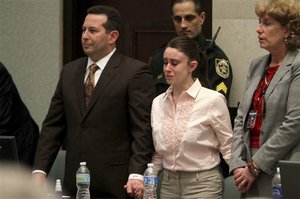
On the afternoon of July 5 as I heard the final “Not Guilty” on the death-related charges, I was surprised and disappointed. I hadn’t believed the jury would be able to reach a unanimous decision of not guilty on each and every major charge in so short a time, and without asking a single question of the judge or requesting to have any testimony read back.

Almost immediately analysts and trial followers brought up comparisons between this and the OJ Simpson criminal case. Both had seemingly overwhelming evidence. And yet the prosecutors in each case apparently were unable to convince even a single juror that the defendant was guilty.

So when was the case lost? One possibility is that it happened when Baez made his drowning and sexual abuse claims during his opening. Under this theory, Baez never had any intention of calling Casey to the stand or putting on any other supporting evidence. He simply used his opening to get those ideas into the minds of the jurors. To plant the seed if you will and make the prosecution play defense. If true, what many thought was a major error on his part could actually have been a brilliant strategy.

Or maybe the jurors related better to the defense team than to the prosecutors. Jeff Ashton may have come across to them as a bully during what I thought were his skillful and highly effective cross examinations of defense witnesses. And his laughing during the closing by Baez may have turned some jurors off.

Could it be that when the jurors looked at Casey Anthony sitting only feet from them day after day, they came to see her as an innocent young mother incapable of harming her own daughter?

Or are we now in the CSI era where jurors expect every case to be solved conclusively in 40 minutes plus commercials? And is it now unacceptable for any question to remain unanswered or unproved?

The answer could be one of the above, none of them, or a combination.

The bottom line is that we may never know for sure what happened to Caylee Anthony or what took place in the minds of the jurors. The verdict is in and must be accepted.

During the closing by Jeff Ashton, he said that the defense was asking the jurors to go down a rabbit hole and accept their outrageous theories that had no basis in fact, and made no sense. And Ms. Burdick said her biggest fear was that common sense would become lost during deliberations.

In my opinion, the jury did accept the defense invitation to go down that rabbit hole into Wonderland. And when they did, they in fact left their common sense on the surface, just as Ms. Burdick feared. And in doing so they deprived Caylee Anthony of her one shot at justice.


Related Posts Plugin for WordPress, Blogger...

Disclaimer

The opinions and information expressed in the individual posts do not necessarily reflect the opinions of each contributor of "Time's Up!" nor the opinion of the blog owner and administrator. The comments are the opinion and property of the individuals who leave them on the posts and do not express the opinion of the authors, contributors or the blog owner and administrator.