Showing posts with label Victim Blaming. Show all posts

Tuesday, November 5, 2013

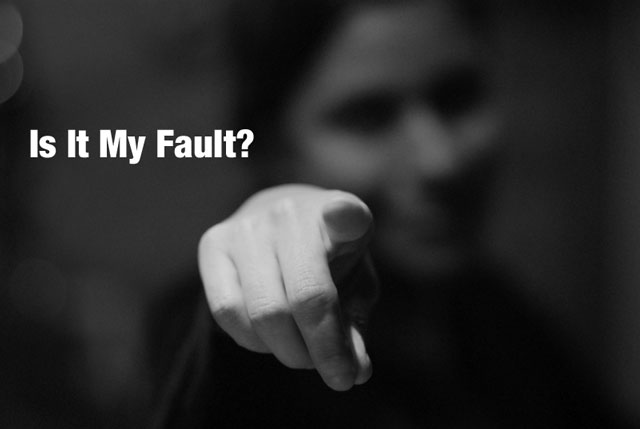
Blaming the Victims

by Heidi Hiatt

Every time the topics of abuse, dysfunction, and boundary violations come up, I cringe, knowing that the same old sanctimonious rhetoric is about to slither up my neck like a decrepit, toxic snail: “We’ll pray for you. You need let go of your unforgiveness. We hope that the root of bitterness will be dug out.”
In my mind I’m asking, “and do you realize how many people are driven away from the Gospel because of this damning, judgmental legalism instead of towards it?!!” Then mushroom clouds erupt from my ears in a white-hot flash of righteous anger.
Blaming the Victims 1
While I am by no means a perfect example of my faith, I’m not shy about identifying as a Christian. Why should I be? A God who loves me personally sacrificed His Son so that I could live– and not just live now, but always. Don’t ask me to explain that. The concept blows my mind. But knowing there is a life beyond this, and that love is eternal, and that there is a reason to keep going even in those deep, dark, silent moments– it’s glorious.
While I’m thankful for a strong Christian heritage in some branches of my family tree, my faith has been born largely of adversity, not out of some blind adherence to the ways of my ancestors. One reason I hold tightly to God is because His love transcends the dysfunction of my earthly family, not because His love reflects that family. The Psalmist understood this, saying, “though my father and mother forsake me, the LORD will receive me” (Psalm 27:10).
While godly family members have had a major influence on my faith in Christ, certain overzealous efforts and timeworn legalistic platitudes could have driven me away from the Gospel the same way it’s repelled others who are dear to me. Legalism, simply put, is adding man-made rules on top of God-made rules as if a true believer is supposed to honor the whole shebang. It is a recipe for pain and conflict that has driven millions away from God and even to extremes such as suicide. Trying to please man on top of God can be an impossible task.
Legalism is self-serving and narcissistic. It is a way that men can feel better than other men, a holier than thou set-up which condemns those who don’t bow to the almighty cultural norms of a particular church or sect. One of the most blatant mistakes that overzealous, legalistic people make– and that drives people away from a loving, merciful God– is blaming the victims. What I mean by this is that their default, knee-jerk reaction to any sort of violence, particularly family violence, is to immediately make the victim feel responsible for what someone did to them.
Blaming the Victims 3
I have experienced this to varying degrees my whole life and grieve at just how much damage it has done in my circles. It fractures families. Christians who do this are painting a false image of God, making Him appear to be an unapproachable, sadistic comandante who’s waiting to strike you with a bolt of lightning. To be told, when you’ve been mistreated, abused, or violated, that “it’s your fault” can be the least godly and most damaging thing that could possibly be said. But it’s also the easiest thing for them to say, because it avoids facing the real issues and addressing evil for what it is.
Ironically, “blame the victim” types often don’t know the victim’s whole story or enough of their circumstances to make a proper assessment of the life, but assume that they know enough to judge that person. Because of their own need to feel holy, or morally superior, or to maintain control or their public image of being someone who’s “together”, they don’t think twice about pummeling the bleeding soul standing in front of them. Mercy and grace go out the window as the claws come out, belittling the person who just tried to confide in them and adding to the crushing stress they’re already carrying.
These attacks on the victim can occur in a number of ways. After some conversations with an insightful relative I made a partial list of some of the most common behaviors of the “blame the victim” crowd.
1. Poor boundaries. Many of these blamers have poor boundaries and allow dangerous people in their circles believing that God will change them. God might, but in the meantime, as believers in Christ, they should discern between good and evil and protect those who need to be protected. Allowing abusers, stalkers, and some types of criminals to remain in close proximity to their victims is idiocy. If they believe those offenders need discipleship or counseling, that can be done far away from the victim and does not need to involve them.
Blamers also need to realize that just because the abuser, etc. is a family member does not mean that the victim is required to maintain contact with them. This is a common, glaring error in the church that puts hearts, souls, and lives in danger. If one person presents a threat to another, be it emotionally, physically, or what have you, there is no “Christian” requirement for the victim to maintain contact and keep putting themselves in harm’s way. Sometimes forgiveness, reform, etc. can only be done from a distance in order to keep the victim from being violated again.
Blamers like to chide victims for having boundaries. When discussing boundaries with people I like to point out that as a Christian you should have better and stronger boundaries with evil for that is what separates you from the rest of the world. Blamers believe that they are separate and sanctified, yet often deride victims for not acting like doormats. Remember, Christ said to turn the other cheek, not let yourself be used, beaten, raped, or killed.
2. Denying the trauma. If you don’t understand someone else’s trauma, it’s easy to dismiss it. We understand PTSD, for example, in the context of war and acknowledge that many soldiers come home with it. But how many in the church realize that victims of family violence can also suffer from PTSD? A great many do. Regardless of whether the effects that violence have had on a victim’s life can be classified into a known diagnosis or not, that violence has very real effects on victims’ minds, hearts, and physical health. That trauma exists whether blamers want to acknowledge its existence or not.
Blaming the Victims 2
3. Denying the abuse that is still happening. Blamers frequently do not understand the dynamics that drive family violence, namely power and control. They wouldn’t know what abuse is if it were happening right in front of them– and it does. In a frightening twist, blamers are often people in positions of power within the church. They are those who counsel parishioners in failing marriages and run ministries in which people are likely to need help with problems like domestic violence.
Unfortunately, when a victim comes forward and says, “I just had a horrible fight with my husband and I’m afraid it’s getting worse,” their solution is not to connect the victim with a domestic violence advocate, but to discuss the ways they can “get their husband to stop doing that.” This is the “wear a pretty dress, do your hair, make sure a delicious casserole is waiting when he gets home” approach. It is a total denial of what is happening to that woman and the danger she is in.
Blamers like to assume that you stay away from certain people because of what’s happened in the past, as if you’re not letting go of it. In their book, if you’ve truly forgiven the person, then you should let that person back into your life. They are blind to the fact that you’re not keeping your distance because of the past, but because of what that person is still doing.
A lot of abusive people will never change and many get more abusive in time. They also learn more covert ways to abuse their victims over the years, meting out their punishment in ways designed to make the victims look crazy and them like the good guys. They’re con artists.
Blaming the Victims 5
4. Failing to call evil what it is. Blamers don’t want to call someone in their own family evil, especially if that person considers themselves a Christian. They also don’t want to label any other Christians as such. This is the part at which I remind them that there are both sheep and wolves in the church and sometimes the most successful wolves are those with the most glamorous sheepskins.
Domestic violence, divorce, and other horrors happen in Christian families as much as they do in the rest of the population. It’s a sad fact that sits right next to another tragedy, the tragedy that the church is often the last place people go for help. Those I work with on domestic violence advocacy issues know I’m a firm believer that the church should be the first place victims go for help. Until all Christians can recognize evil as evil, though, this will never happen.
Hurting another human being when it isn’t in self-defense is evil. Trying to berate them, belittle them, control them, molest them, sexually assault them, hit them, and otherwise violate their boundaries is evil. Church, why aren’t we as a whole getting this? Saying yes to Jesus means saying no to evil and when He said, “do unto others,” He wasn’t kidding. As author Joel Rosenberg says, “misunderstanding the nature and threat of evil is to risk being blindsided by it.”
5. Endangering the victim by not taking them seriously. When blamers deny what a victim is enduring and how it’s affecting them, they become a party to their undoing. Denying the danger someone is in, be it psychologically or physically, doesn’t make it go away. As I mentioned in the boundaries section, blamers often see nothing wrong with pushing victims to “reconcile themselves” to their violators which often places the victims in harm’s away again.
6. Making the victim into someone they’re not. Anyone who’s dealt with domestic violence or crime knows that victims are often questioned as if they’re the suspects. Blamers are adept at this tactic. Rather than find out what truly happened and learn the victim’s side of the story, they automatically stereotype a victim who is standing up to their attacker as overly sensitive, needy, damaged, or any other derogatory and convenient term that comes to mind.
After they’ve had their “pep talk” with the victim about their “unforgiveness” and how the victim should practice their unsafe brand of reconciliation, they condemn the victim if they don’t do things their way. This can lead to all sorts of judgmental, damaging gossip that can make others question the victim’s motives and credibility. Blamers: just because a victim doesn’t handle their situation your way doesn’t make them un-Christlike. Please separate your legalism from your faith.
Blaming the Victims 4
7. Lack of discernment. What is the most universal behavior of sociopathic people? They prey on your sympathy (thank you, author Martha Stout). Blamers frequently get sucked into the suspect’s ploy for sympathy, especially when it is someone close to them. They simply don’t want to believe that their relative or close friend is capable of what the victims are saying they are.
Abusers in particular love to twist things around to make themselves look like the good guys and get everyone to frown on the supposed immaturity/insecurity/faults/weaknesses/shortcomings/fabrications/exaggerations, etc. of the victims. And many Christians just fall for it! Christians– those who are supposed to have the Holy Spirit living within them to show them right from wrong– sometimes fall all over themselves to accommodate criminals and abusers as if they’re the “real” victims.
Unacceptable! When someone comes to you and tells you that they’ve been violated or mistreated, you should start by believing them and making sure they’re safe, not rushing to defend your buddy or brother who “couldn’t have possibly done that.” It deeply troubles me that so many believers don’t pause to consider how much trouble the victim might be in or to ask God for His insight before they rush to defend the wolves.
8. Damning the victim’s future. Blamers are masters of limiting God’s grace. Even those who might provide genuine and desperately needed help to victims act as if God’s mercy for their situation only goes so far. A blamer might have the wisdom to help a victim out of an abusive marriage– and may God bless them for doing so. But they might simultaneously be lecturing the victim that they can never be married again and must adhere to a monastic lifestyle. They will readily bust out scripture to support their attempt to control the victim’s life, going as far as to assure the victim they will go to hell if they don’t do things their way.
In my church we believe that victims of certain circumstances can be married again and a senior pastor convinced our congregation of this through scripture. There are violations of the marriage covenant that render it broken and there are some circumstances too dangerous to go back to.
To say that the victim has to spend the rest of their life honoring a broken covenant is ludicrous. That limits a God who specializes in second chances, healing, and redemption. It limits His infinite grace. Yet is exactly this threat of hellfire and damnation for daring to allow God to make something magnificent out of our brokenness that condemns many victims to stay in potentially deadly relationships.
Blaming the Victims 5
Ultimately, blamers who put the onus on victims are just adding to the stress that the victims are already dealing with. They are helping keep them in the shadows rather than taking their hands and walking with them into the light. By adding all their nitpicky little rules, regulations and rituals to what is supposed to be a simple relationship with a loving and forgiving God, they could very easily be turning more people away from Heaven than towards it.
It breaks my heart to see how this supposedly pious behavior misrepresents the God who wants to be a Father to His children– a truly worthy father, a very different father from the earthly one many victims have had. Why would non-believers want anything to do with a God who makes them feel like what happened to them is primarily their fault? That is, however, exactly what is being represented to them by the astounding number of “blame the victim” believers.
It is important for blamers to remember is that it’s not up to them to decide what’s best for another adult. They need to respect the choices that an adult victim/survivor has made and not make it their mission to bend another human being to their will. God Himself has given each of us free will and we are to help others conform to His image, not our own. Exercising some sick, selfish need to control others and make them feel like less of a Christian for standing up to evil requires a long, hard look in the pool of reflection.
Next time you are tempted to start lecturing a victim about the walls they put up to protect themselves and their family, or start dictating to them how they should feel or act, consider who you are an ambassador for. Is this really how you want people to see Jesus, as judge, jury, and executioner of the wounded? How does a self-righteous, pharisaical dissection of the victim’s supposed mindset, heart, and actions serve to further the kingdom? Are you risking their soul just so you can feel morally superior?
Imagine the victories that could be achieved if you would put your energies into being strong support for victims rather than picking them apart. Consider whether the way you treat victims of crime and violence is driving people towards the cross or away from it. Then adjust your approach accordingly, because the way the church is responding to the horrors in our society has influenced millions of people to turn away from the faith.
Are you a part of the solution or part of the problem?
Blaming the Victims 6
********************************************************************************
If Jesus had tried to make everyone happy, we would all be lost. If self-centered people are angry at you, it means you are learning to say no to evil. If mean people are displeased with you, it means that you are standing up to abuse. If pharisaical Christians judge you, it means that you are becoming like your Savior. If your parents don’t like the decisions that you as an adult feel God has led you to make, it means that you are growing up. –Henry Cloud


Heidi Hiatt, MA recently graduated as a Forensic Psychologist.  You can read more of her posts at her personal blog, Truth, Justice, and All-American Allergen-Free Apple Pie Straight Talk in a Crooked World

Friday, February 24, 2012

Vulnerabilty, Danger, and Blame


By Roger Canaff

“There is no vulnerability without danger.” Veronique Nicole Valliere, Psy.D.

It’s a simple and brilliant truth, introduced to me at a sex assault prosecution training in 2009. The doc was discussing how we blame women (and men) who are sexually assaulted, particularly when their choices leading up to the attack make them, in most minds, “more vulnerable.” Like when they drink too much, or when they go home with a man they don’t know well. And so on.

When I heard it, I nodded sagely. Sure, I believed in what I called “rape prevention,” and felt that everyone needed to take some responsibility for their own personal safety. But that’s all. I wasn’t anywhere near victim blaming. Because I was too smart for that. Too enlightened. Too smugly ensconced as one of the more influential sex assault prosecution experts nationwide. So naturally, I understood her perfectly.

Except that I didn’t. Because I was victim blaming, even though I told myself I wasn’t. And in buying into the kind of “rape prevention” I believed in, I was a part of the problem. Many of us, most with the best of intentions, still are.

The ad above from the Pennsylvania Liquor Control Board (now pulled) sparked a debate in feminist circles. The ad itself wasn’t the issue; most agreed it was offensive. Visually it sexualized violence, right down to the blue underwear around the seductively placed ankles matching the tile on the floor. That’s not a representation of the aftermath of a felony. It’s wanna-be pornography. And of course, it callously blamed both the curled up, naughty-girl and her irresponsible friends for not preventing the rape she apparently endured. No mention of the rapist.

But while the attempt was botched, the underlying message begged a question: Shouldn’t we warn girls and women about the dangers of losing control, and thus “becoming vulnerable?” Isn’t it simply a dangerous world, like it or not? Of course it is and of course we should, went the argument. It was a bold one apparently, expectant of a backlash from uber-feminist PC police who would label it victim blaming even though the goal was simply to “reduce vulnerability.” When the backlash came, I initially sided against it. I had seen a career’s worth of victimization- how could I not encourage safe behavior myself, in the name of reducing vulnerability? Because vulnerability invites danger. Right?

Wrong.

Go back to the statement at the top of the page. Vulnerability does not exist unless danger is present. Choices, however reckless they appear, do not create danger anymore than liquor creates rape in a man who is not a rapist. Danger exists because of the choices dangerous people- rapists, in this case- make. From this reality, two others flow: First, encouraging young people (the most at-risk population, male or female) to avoid victimization through more responsible behavior will not prevent a single rape, as author Jaclyn Friedman points out in her piece on the subject. Rape is never an accident, and it’s almost always a planned attack. The rapist who cannot target the “better-behaved” woman will find one who isn’t. So there won’t be less rape, just rape of perhaps different people. Of course, the predictable rejoinder is “well my daughter won’t be the targeted person, then.” Game, set, match. Admonish away.

Except that she might be regardless, which is the second reality that results from Dr. Valliere’s observation. The woman who believes she is safer because she’s avoiding something like heavy drinking might well be safer to a particular kind of attack. But there are many others, and being lulled into a false sense of security because of the avoidance of one behavior will likely blind her to the danger that can exist under the most responsible appearing of circumstances. Women are raped by trusted friends. They’re raped during the daytime while studying or just listening to music with known, clean-cut, well-regarded men in their communities, on their campuses, from their churches. Alcohol is extremely helpful to acquaintance rapists. But it is hardly their only tool.

Youth involves blind spots, but regardless of age, risk-taking is at bottom the essence of life. There is no elimination of it short of solitary confinement. What we must do is grasp that vulnerability exists only when danger is present, and turn the focus rightly on the dangerous and away from the endangered.

Because when we create rules, particularly ones laced with moral superiority in order to somehow deliver us from evil, we then distance ourselves from those who break them. When those people are victimized, we rest easy, believing that our wisdom and temperance saved us. But there are always more rules, both to make and to break. In the end, all that rule making accomplishes is the encouragement of an insidious urge to will to life something other than luck separating us from the unlucky. So we’ll draw attention to the choices the rule breakers made that we wouldn’t make. And we’ll blame them for theirs.


A widely known child protection and anti-violence against women advocate, legal expert, author and public speaker, Roger Canaff has devoted his legal career to the eradication of violence against women and children.

Roger Canaff: Anti-Violence Advocate, Child Protection Specialist, Legal Expert Blog: WCSV (Women, Children, Sex, Violence: Outcry, Analysis, Discussion) www.rogercanaff.com

Monday, July 11, 2011

Am I Responsible for How He Acts?


By Sandra L. Brown, M.A.

One of the most frequently asked questions in pathological relationship counseling is "Did I make the person behave like this?" The clients often believe they bring out 'the worst in him' or so the pathological wants them to believe. The pathological likes to label his own acting out, cheating or other inappropriate behavior as someone else's fault. This is called projecting. One of the characteristics of a number of permanent personality disorders is the trait that they don't take responsibility for their own behavior. They have a victim mentality and blame others and the world for their shortcomings and ultimately, their bad behavior. Normal people 'own' their own behavior; pathological people project it onto others.

By the time the client comes to counseling from the aftermath of effects from the relationship, she believes the relationship, its problems and its demise were all her fault. She believes the pathological's propaganda and has a lot of remorse, guilt, and self depreciating thoughts about herself that 'if she only acted differently then so would he' and the relationship would be on better footing.

Let me ask you this...."If he had a brain tumor, would you feel responsible that his body produced a brain tumor? Would that be your responsibility?"  I doubt it. People do feel bad that someone else got a brain tumor, but they don't feel 'responsible' or 'to blame' because someone got a brain tumor.

The often shocking aspects of Cluster B personality disorders are that what is driving their behavior is not a brain tumor but it is a brain disorder---in many, many forms. We expect that a brain disorder would be 'noticeable' to others. It is--in time. By the time the relationship ends, you DO know that there are behavior problems; you just don't know how, why, or where they are generated.  Cluster B personality disorders carry with them an astounding array of problems stemming from the brain and their own neurology.  These problems drive the pathological's impulsive, out of control behavior and distorted thinking processes.

Even a decade ago, we didn't have the information we have today about the wide-reaching neuro problems associated with pathology and personality disorders. While for many years we may have 'suspected' a very physical reason for the behavior--the pathological lying, spending, cheating, violence, addiction, and other behavioral problems-we didn't have the concrete knowledge now generated from neuroscience, neurobiology, brain imaging, and other brain studies.

Here is a tiny snippet of the kinds of information being generated about brain dysfunction in personality disorders. This in no way covers all of it--but it gives us some place to begin looking at it as being as much a medical brain syndrome as it is a psychological syndrome.

  • · Genomics--molecular building blocks of DNA affected by pathology.
  • · Proteomics--location, interactions, structure, and proteins affected by pathology.
  • · Neurotransmitters affected.
  • · Hippocampus--part of the brain that is related to impulsivity affected by pathology.
  • · Amygdala--part of the brain that is related to impulsivity affected by pathology.
  • · Neuroinformatics -A library data base about thousands of different brains and what is unusual about them including pathological brains.
  • · Cellular signaling show involvement of genetics in pathology.
  • · Low levels of brain enzymes are related to violence.
  • · Genes on certain chromosomes create schizophrenia, bipolar, etc. New research wants to find out if it contributes to pathology.
  • · Genetic vulnerability causes significant differences in neurological development in children with psychopathic tendencies.
  • · The number of copies of different genes has already been linked with a variety of medical conditions and the expectation is that these copy number variants will be very significant in personality disorder research.
  • · A complex array of varying genes underlies the many different outward manifestations of personality disorders which can be seen in early childhood despite a loving and stress free environment.
  • · Stressful/abusive environments can push a milder case of personality disorders into a full blown active personality disorder.
  • · Phenotype images the size and shapes of brain organs related to personality disorders.
  • · Serotonin reception 5-HT plays a role in controlling offensive aggression (or not!)
  • · The lack of transporter molecules predisposes people towards impulsivity, emotional instability, etc.
  • · Polygeny (a single trait that can affect many genes) seems to underlie personality disorders.
  • · Those who metabolize dopamine faster are at higher risks for anti social behavior.
  • · An enzyme that helps break down dopamine and serotonin are linked to impulsive and aggressive behavior, substance abuse, criminal behavior.
  • · MAO-A gene is linked to Cluster B personality disorders.
  • · Neural circuitry problems are related to trouble with reinforcement learning so they are not likely to learn from punishment, also related to impulse violence.
  • · TPH brain enzyme is related to behavioral problems associated with anti social behavior.
  • · MRI imaging shows that areas of the brain related to excitability respond differently in psychopaths.
  • · Certain words cause psychopaths to respond differently than normal people (blood, sewer, hell, rape, etc.)
  • · Some parts of the brain show higher activity in psychopaths, some areas lower activity in psychopaths.
  • · Weak limbic regions of the brain in psychopaths cause them to grapple with emotional language.
  • · Corpus callosum is different in psychopaths so they process information between brain hemispheres differently which effects interpersonal skills and low reactions to stress, high reactions to aggression and unregulated behavior.
  • · The amygdala in psychopaths have less reaction to fight-flight responses This causes psychopaths to feel restless, spurring them on to raising hell just for the excitement value.
  • · Slower neural reactions are related to their lack of fear which is also genetically based.
  • · Lack of fear throttles the development of the conscience.
  • · Orbito-frontal portion of the brain causes psychopaths to have trouble organizing their behavior, reduces their ability to control their impulses and the ability to learn from punishment.
  • · Difficulty with abstract meanings like the word 'justice' generated from right brain quadrant, also problems with nonverbal cues related to emotions.
  • · Dorso-lateral Prefrontal Cortex affects some personality disorders ability to think logically and rationally.
  • · The anterior cingulate cortex affects some personality disorders ability to focus on something they don't wish to hear thus being able to block what they want to hear, it also produces (or doesn't) the feelings of empathy.
  • · The limbic system which is affected in some personality disorders negatively influences their ability to regulate their emotions through emotional reasoning.
  • · The hippocampus is affected in some personality disorders which negatively impacts the emotional response system.
  • · Hyperactive amygdalae cause intense and slowly subsiding emotions when they suffer even just a minor irritation. This can cause an overreaction to a minor constructive criticism.
  • · Lowered serotonin levels in the brain affects increased impulsivity.
  • · Smaller size of right parietal lobe in some personality disorders.

Yeah, I know--that's a lot of science to wade through but maybe you get the point: you didn't break him and you can't fix him. This fascinating decade of science has answered so many questions for so many---people who can let go of the guilt and fantasy that what's wrong with him is merely 'willful behavior' or 'a bad attitude' or 'needs more counseling.'  Personality disordered brains are different in their genetic makeup, chemistry, circuitry, regional brain development, neurobiology...and the list goes on. In fact, we are realizing so much of the brain is affected---in borderline personality disorder, in anti-social, in psychopathy--so much of Cluster B is traced now to significant brain impairment. (For more information read the book 'Evil Genes' available on our website).

For many years I have been teaching the Three Inabilities related to pathology:
  1. The inability to grow to any great emotional depth
  2. The inability to consistently sustain positive change
  3. The inability to develop insight about how their behavior affects others.

I developed these inabilities from 20 years in the field of providing services to the personality disordered. Although I suspected there was hard-wiring and hard science behind it, it wasn't until recently that I was finally able to find out why the Three Inabilities are actually correct and why they don't sustain positive change. It's not because they want to screw with your head....it's because of their head.

You didn't produce anything--you're so influential that you can setup his genetic patterns.  Sorry--you're not strong enough to 'will' his amygdala to change. Bad news here--you are not gonna 'love' his limbic region into correct functioning. And hate to break the news that all the 'Law of Attraction' books in the world aren't gonna get his brain chemistry to be normal.

And you might as well cancel the relationship counseling because being tolerant it isn't gonna change the size and function of various brain regions. Stopping nagging or trying the relationship 'just one more time' isn't going to alter his brain enzymes and neurotransmitters.  Even Batterer Intervention groups aren't gonna change his corpus callosum and make it less aggressive.

He doesn't have a brain tumor that you are responsible for 'giving him.' He does have a brain disorder. You aren't responsible for that either--how his brain did and did not form. In the medical world, we seem to accept some disorders much more easily, like Cystic Fibrosis or Mental Retardation. With these disorders, you can often see visible symptoms. In pathology, you also see symptoms over time.  The difference is that the symptoms are visible not through external medical conditions but through relationships. We find the symptoms of psycho-pathology related to brain dysfunction right in the middle of your relationship.

Sandra L. Brown, M.A. is the Founder of The Institute for Relational Harm Reduction and Public Pathology Education.  Visit her site for information about services and products:  http://saferelationshipsmagazine.com

Wednesday, April 6, 2011

Berea College Blames Victim for Being Sexually Assaulted


By Gayle Crabtree

Will the Decision Alienate Alumni and Donors?


Students learn that no means no well before they enter college. Apparently, that lesson is an elective course that some people missed. That could explain why legal counsel for Berea College blames a sexual assault victim for her injuries.

It all began in March 2010, when a Berea College student came forward claiming that she had been sexually assaulted by a (then) professor. The professor was later arrested under the charge of sex abuse which is a Class D felony. In January, Demetrius Semien pleaded guilty to lesser charge of fourth degree assault against the student.

A lawsuit filed by the student against the college is asking for $4,000 in damages. This includes past and future medical bills, mental and physical pain and suffering, punitive damages and also costs surround the litigation and a trial by jury.

The response was decisive. Legal counsel for Berea College blames the sexual assault victim for her injuries and is asking that the suit be dropped. Not only that but legal counsel for Berea College is also asking for "..any and all other relief to which it may be properly entitled".

First legal counsel for Berea College blames the sexual assault victim then it adds salt to the wounds. Not cool.

Sexual assault victims are not responsible being hurt. In today's world, there is no room to say that injuries "were caused and brought about by her own negligence and/or intentional act". This point of view is both harmful and antiquated.

My family has had nothing but overwhelmingly positive contact with the school. As the parent of an alumnus I am deeply saddened by the direction of counsel. As an advocate I am deeply angered.

The Sexual Assault Reporting Guidelines and Information in the Student Handbook tell a different story. It defines a representative as any college representative is any faculty or staff member. Yet, legal counsel for the school says that the former professor did not represent the school. It's difficult to have it both ways.


Advocates work to educate the public about the realities of sexual assault. For years we have taught that no means no. It doesn't mean "maybe" and it doesn't mean "yes" and it doesn't


mean that victims are responsible. Abusers create victims. Victims don't create abusers. It really is that simple.

There is a strong backlash as Berea College blames a sexual assault victim for her injuries. A petition on Change.Org is gaining momentum. Alumni do not support Berea Colleges Statements that place blame on Sexual Assault Victim. Bloggers are writing about it and people are talking about the situation on Twitter.

In this day of funding shortfalls the school would do well to stop the blaming. Every school needs a donor support base to help offset budget shortfalls. The majority of the support usually comes from alumni, their families and the public at large.

Right now, as legal counsel for Berea College blames a sexual assault victim, it is apparent that the alumni are paying attention. Whether they will help the college pay its bills in the future remains to be seen.

Richmond Register
LEX18 News

Gayle Crabtree is Founder and Executive Director of Hope For Healing.Org

Tuesday, June 22, 2010

The Two-Faces of Steve Nodine; Politician and accused murderer of Angel Downs


GOOD
EVIL
Served on Alabama Sentencing Commission
Accused Murderer
Politician- Family Values Platform
Liar - impeached
Condemned Clinton for womanizing
Adulterer
Worked with aides babies
Drug and Alcohol Abuser
Help seniors and firemen
Batterer
US Army Serviceman
Stalker
Friend of Alexander Haig
Father and Husband
Neglectful
Prayer requests
Non-church attendee - hypocrite


Steve Nodine, "The Hammer" was cocked and fired allegedly killed long time girlfriend, Angel Downs, on Mother’s Day at her home in Gulf Shores.
More women are victimized at their home by their intimate partners and killed with firearms than all other means combined. Jurors expect domestic violence victims to accept responsibility and leave batterers. Most murders occur when that happens and we know Angel Downs was trying to end the abusive relationship with Stephen Nodine.
We struggle to understand the offender’s motives and ask, “Why did he do it?” Some comment Steve Nodine was a “good man,” he did much to help the Mobile community. He did his job as County Commissioner well. It is a societal myth that niceness cannot coexist with violence, or evil; consequently the “good” guy must not be a murderer.
I would like to point out that all of Steve Nodine’s pro-social “goodness” has in fact benefited him each time. Being “good” was his best camouflage. This was how he manipulated the public and his victims by being “good”. The good deeds are so the public vouches for his trustworthiness. His victims are then lulled into trusting him because he is “good.”
Angel lost her life because of her trusting him. She had lived through many other attacks by this batterer and he escaped arrest, when law enforcement was called to intervene, by using his “good service” as County Commissioner.
Repetitious physical assaults of the past relationship were accelerated and even justified allegedly by Nodine, because of the termination attempted by Angel. “What’s past is prologue” (William Shakespeare, The Tempest, Act II, Scene I).
When a woman is repeatedly battered, yet unable to flee the traumatic situation even when escape is apparent and possible, the result is learned helplessness.
Battering and stalking by definition are not static but an evolving, continual and progressive crime. Requiring a “course of conduct” over a period of time demonstrating a continuity of purpose. Nodine allegedly repeated the harassing, threatening and abusive behavior to give the appearance of power and control.
  • Prior threats/violence with current victim and prior victim
  • Prior stalking behaviors
  • Criminal history
  • Mental disorder or mental illness history
  • Drug/alcohol abuse
  • Weapons possession/use/access to
  • Threatened suspect
  • Presence or absence of inhibitors (inhibitors are factors that may prevent the suspect from acting out violently. I.e., family, friends, job, health, reputation, etc.)
  • Proximity to significant dates, such as anniversaries, holidays, birthdays, etc.
We now have the facts that Steve Nodine has two faces. One for the public and the other, his true face he kept somewhat hidden. Steve Nodine is a skillful manipulator, he and his defense will try to focus on Angel Downs’s behavior not his. He may say it was an accident. It will be up to the prosecution to expose all signs of planning in Nodine’s behavior. Hopefully the jurors will find Nodine has committed acts that are abhorrent and anti-social, rather than engage in victim blaming of Angel Downs.
Why did he do it? Steve Nodine’s character traits motivate his offenses. We know from public records Nodine has an alleged criminal, narcissistic, or otherwise interpersonally-and-socially-compromised personality, he can be motivated to offend for a variety of reasons. He may lack the internal barriers that prevent offending, like guilt, remorse, empathy, or compassion. He may maintain a belief system, which devalues the rights of others and overvalues his rights. Nodine's evil face shows alleged indifferent to the pain, suffering, injury or humiliation of others. He may also feel the rules of society don’t apply to him, as his womanizing, pill-popping, pot smoking, stalking, battering and general unlawfulness seems to support.
Angel Downs knew Steve Nodine’s evil face and she had tried to expose and escape it. He did not want to lose control of her and possibly all he had worked for, if this came out. There were already nicks in his shining public armor from his drug arrest.
Did he try to prove he really was “good” and take her to the beach she loved on Mother’s Day? Maybe he feigned to say good-bye and end it? Did he leave his wallet at her house on purpose? Did he call her? Asking her to bring his wallet out to the truck? Did he then shoot her in the head?

Nodine has already began his "sympathy" defense which includes his less than ideal childhood, his absent father, brother with a brain injury, sister who was run over, mother who worked 3 jobs, and a bad hip, He has been victim blaming Angel telling Doctors she had a Romeo and Juliet death wish. Funny he didn't hear the shots fired (though the neighbors did) nor did he stop to help her. According to his phone records the only time he isn't talking or texting is the 60 mins after Angel's murder. Emails released show Nodine to be a batterer using his badge to intimidate and his addiction pushing over the edge. (Check out Peter Hyatt's statement analysis of emails) Angel was deathly afraid of him and even dreamed of him killing her.
Steve Nodine’s most powerful tool he will use in his defense is to be “good.” A “good man” doesn’t fit society’s image of a murderer. Society also wants them to be strangers. The fact is: MOST ARE NOT. “Goodness” is a powerful weapon. When someone is good, it is difficult to confront him or mistrust him.
Nodine’s camouflaged “goodness” has fallen apart. His character witnesses have been proven to be either near-strangers or alleged criminals. Nodine is trying to rely on societal biases and stereotypes about, “murderers.”
Look at the above chart contrasting Nodine’s “good” behavior against his "evil" behavior. Remember he is counting on society to perpetuate that niceness cannot coexist with violence, or evil; consequently the “good” guy must not be guilty of the alleged murder of Angel Downs.
Hopefully prosecutors will be able to expose Nodine and portray the so called “good” guy” as the evil murderer they allege he is.

Sadly Nodine has recently been released on bail. Hopefully not for long.


Friends of Steve Nodine
Nodine's attorneys are solicitating funds using photo's of Nodine's 13 year old son (many photos were when Nodine was having affair with Angel Downs) and President George W. Bush and various other politicians for Nodine's defense. He never mentions it is for MURDER. The site is called FriendsofSteveNodine.com and Paypal is the choice of payment as no local bank would agree to open a defense fund for Nodine.

Join us on Facebook as we Support Justice for Angel Downs.
Listen to the Dana Pretzer show on Scared Monkeys Radio with special guests WKRG Reporter Jessica Taloney and famous True Crime Author Diane Fanning discuss the Angel Downs murder case on 6/13/2010.

CRIMEWIRE 6/22/2010 at 8pm discusses the Nodine case with expert Peter Hyatt statement analysis of Caylee Anthony and Susan Smith fame. Along with Mobile journalist Kevin Lee of Lagniappe. Along with the rest of the expert team Dennis Griffin, Vito Collucci and Susan Murphy-Milano. you may listen on-line, podcast or call in to listen or contribute at (646) 478-0982


References
  1. Adams, D. Why Do They Kill? Men Who Murder Their Intimate Partners. Nashville, TN: Vanderbilt University Press, 2007.
  2. When Men Murder Women: An Analysis of Homicide Data Sept 2009 www.vpc.org
  3. Bible, A., and A. Weigl. “Cries of Abuse Unheeded, Assaults Rise to Murders.” News and Observer [Raleigh, NC], May 18-20, 2003, quoted in A. Klein, The Criminal Justice Response to Domestic Violence. Belmont, CA: Thomson/Wadsworth, 2004: 139.
  4. Block, C. “Risk Factors for Death or Life-Threatening Injury for Abused Women in Chicago.” Final report for National Institute of Justice, grant number 96-IJ-CX-0020. Washington, DC: U.S. Department of Justice, National Institute of Justice, 2004, NCJ 199732. http://www.ncjrs.gov/App/Publications/abstract.aspx?ID=199732
  5. de Becker, G. The Gift of Fear. Boston, MA: Little, Brown & Co., 1997, NCJ 177216 http://www.ncjrs.gov/App/Publications/abstract.aspx?ID=177216
  6. Greenfeld, L., and M. Zawitz. Weapons Offenses and Offenders. Bureau of Justice Statistics Selected Findings. Washington, DC: U.S. Department of Justice, Bureau of Justice Statistics, November 1995, NCJ 155284. http://www.ncjrs.gov/App/Publications/abstract.aspx?ID=155284
  7. Macmillan, R., and C. Kruttschnitt. “Patterns of Violence Against Women: Risk Factors and Consequences.” Final report for National Institute of Justice, grant number 2002-IJ- CX-0011. Washington, DC: U.S. Department of Justice, National Institute of Justice, August 2004, NCJ 208346 http://www.ncjrs.gov/App/Publications/abstract.aspx?ID=208346

Related Posts Plugin for WordPress, Blogger...

Disclaimer

The opinions and information expressed in the individual posts do not necessarily reflect the opinions of each contributor of "Time's Up!" nor the opinion of the blog owner and administrator. The comments are the opinion and property of the individuals who leave them on the posts and do not express the opinion of the authors, contributors or the blog owner and administrator.