Showing posts with label Sandra L. Brown. Show all posts

Tuesday, April 24, 2012

When Others Don't Like The 'P' Word


by Sandra L. Brown, M.A.

I was recently asked to be on a national TV show to discuss the issue of psychopathy in relationships based on my book 'Women Who Love Psychopaths.' They had looked at the website, read information about the book, discussed what the rest of the show was going to be about, and booked me for the show. They didn't invite me based on my other book (although equally as informational) How to Spot a Dangerous Man, they booked me to discuss and showed the book cover of, Women Who Love Psychopaths.

However, 20 minutes before going on air a producer told me 'they' (whoever that is in TV world) was uncomfortable using the 'p' word--psychopath. They found the word to be 'controversial' and 'sensationalistic' and that my example of probably well known public psychopaths who are not recognized as psychopathic was too debatable and unproveable to discuss.

This was of course sad for me to hear since so much of what The Institute attempts to provide is public pathology education. Truly the only way for people to avoid psychopathy is to develop the ability to understand the traits and learn to spot it in others. All which is why our goal for this agency is public education. This is of course, not our first time to hear that the 'p' word is offensive, debatable, controversial, or judgmental, and it will not be the last time, unfortunately.

Several victims of incredible psychopathic abuse were also on the show and I was asked to comment on their cases but also asked to not use the 'p' word. I asked the producer what she thought those perpetrator's behaviors should be called, or what disorders would motivate their behavior....or what was she suggesting I 'should' call them? I told her I was at a loss to pick another label or motivation behind their lethal behaviors that would come close to helping others understand 'who does that?'. I told her that psychopathy was a diagnosis, not merely a political argument, a theoretical ideology, or even a criminal judgment of character. I was confused as to why I was there when what I do, what I write about, who I help, and who I help convict are overtly obvious from my professional background and from our website.

I was reminded again when I heard 'the p word' is controversial, that public pathology education is still in it's infancy. I know that victims face this all the time when they struggle to figure out what is wrong with the pathological person, only to discover the shocking revelation of the person's disorder. But the victim trying to teach others what is wrong with the pathological is counteracted when others find the information to be disputable, distasteful, unproveable, unlikely, and un-spiritual to even suggest.

The 'p' word is now viewed as the new psychological slur of the 21st century. It's correlated with the devastating racial slurs of the 1950's, the cultural slurs of the 60's-70's, and the gay/lesbian slurs of the 80's-90's. Now, we face the 'p' word the way we faced the 'n' of the 50's and the 'f' or the 60'70's and the 'q' of the 80-90s. But with a huge difference! There is nothing wrong with the 'p' word the way it was intensely wrong with the 'n,' 'f,' and 'q' words of decades gone by.

But it is treated as if we are being racially insensitive, culturally inappropriate, or gender ignorant. We are looked at as the skin-heads of the Diagnostic Statistical Manual that we would 'dare' to 'call someone' a psychopath. We are viewed as the rock throwers at the psychologically-disabled
people with pathology, the Bible thumpers of the poor spiritually disenfranchised psychopath, and the socially clueless that we would spew a power-packing psychological label like 'psychopathy' around that might actually strike and land on a human being.

I know, I know....afterall, it's daytime TV which we all recognize is about ratings and keeping pace with society's Attention-Deficit-Disordered need for topics to be covered in three minutes no matter how riveting the storyline is. Daytime TV covers tsunamis of natural science as well as the tsunamis of psychological trauma in the same fast fall swoop of selling hair dye and lipstick in the same 30 minute segment. What did I expect afterall?

...Well, I always hope that a victim's trauma is recognized and embraced for the emotional and spiritual strength it took to not only survive, but to show up on that TV stage to tell their story to help others. ...Well, I always hope that the need to teach others 'how to spot' the devastating disorders that created the victims trauma is the guiding motivation behind why TV shows exist and supercedes the mere 'storyline-as-business' of TV.

Yes, I recognize that daytime TV is not the spokes person for the planet--that there ARE those who really want to hear more of the victims story and learn more about 'how to spot' them in their own lives....but I have to tell you, it IS a 'cold-water-splash-in-the-face', like a 'wake-up-Sandra-we-aren't-as-far-as-you-think' call that we are whispering the 'p' word behind stage and off camera and are 'editing it out' for public viewing. The whole segment of discussion about low empathy, no conscience and "who does that" was removed. Not one word that explained the behavior of those lethal people was 'leaked' to the viewing audience for public pathology education. We still have miles and miles to go in educating the public that psychopathy is a disorder not a verbal tyriad.

You know what....as offensive, debatable, controversial, judgmental, OR .... as disputable, distasteful, unproveable, unlikely and un-spiritual as it felt to those merely producing a nano-second based TV show to say the 'p' word, the victims who have lived with the 'p' are the true authorities here. They would probably beg to disagree with the nay-sayers that the 'p' is a profound psychological slur. I am sure the victims found the 'p's behavior to be more offensive than TV-land will ever understand. The victims surely wrestled with their own need to over come the 'debatable-ness' of the disorder, or the controversy that swirled around the lethal behaviors of the psychopath and I am sure the victim's incured their own judgmental views of outsiders. I doubt today the victim's find their story to be un proveable or even disputable ---after all, some of these storys ended up in murder or attempted more. All adjectives that are associated with psychopathy.

As 'controversial' as TV-land felt the 'p' word was, does not even compare to the victim's overwhelming need to shout from the roof-tops what the pathological IS....a psychopath.

Using the 'p' word of psychopathy is not a slur. It is a education, a prevention, a DIAGNOSIS, and the reality for millions of victims in the world.

Sandra L. Brown, M.A. is the Founder and CEO of The Institute for Relational Harm Reduction and Public Pathology Education.  She is the author of several best selling books, including How to Spot a Dangerous Man and Why Women Love Psychopathswww.saferelationshipsmagazine.com


Tuesday, January 3, 2012

Venus: The Dark Side


By Heidi Hiatt

In 2008, journalist and author Roy Sheppard and Mary Cleary, founder of the Amen network that helps male domestic violence victims, released a book on female predators that turned heads. Venus: The Dark Side shines light on the inner workings and tactics of, as Sheppard and Cleary put it, queens of manipulation and deceit. Having dealt with such women both in the workplace and on my own time, I was pleased to know that someone has finally written a book on female sociopaths and their cousins. I read it over a year ago and it’s been on my to-blog list ever since.

To quote from their introduction, the type of woman they are analyzing “…is prepared to hurt innocent men, women, and even children to get her own way. This ruthlessness takes the form of physical, emotional, psychological, sexual, or financial abuse… Many are nothing short of domestic terrorists: Al Qaeda in high heels and lipstick… Nothing is ever their fault.” The authors claim that ever since they first shared the title of this book, stories of such women came pouring in from both sexes. I believe it because I’ve experienced and witnessed the wrath of these unbalanced cutthroats, particularly the type who ingratiate themselves to men and terrorize other women.

While the above description of low to no conscience female aggressors is refreshing, I was greatly disappointed that this definition was attached to the word bitch. I understand that the word bitch is commonly used to describe unbalanced, vindictive, and violent women. But I more commonly hear the word bitch used to describe a woman who is willing to stand up for herself, her beliefs, her family, and her self-respect. It is also a word that abusers use against their victims frequently. So I believe the word bitch is a poor choice because it can be twisted to mean whatever someone wants it to and is usually used in a vulgar, demeaning manner.

The book does a good job of detailing how manipulative women go about finding and taking advantage of their victims. On that note, Venus is a crash course in recognizing the vampires among us and what they can do to you once you’re hooked. Sheppard and Cleary note that sociopaths gravitate toward “nice people” and that being a nice person “is seen as a character weakness to be exploited.”

From experience I know that these vampires are empty inside and they are drawn to nice, giving, successful people because they want to take from them what they themselves lack. Nice people are ultimately filling stations on the road to life for these dark souls. As the book put it, “men and women with no conscience prey on those with too much conscience.” They will gladly take your virginity, property, time, money, and any number of other things you hold precious and walk off with them as if nothing has happened.

I appreciate how the authors delve into some common tactics of female sociopaths, such as creating the illusion of intimacy quickly, how they will gladly steal their best friend’s boyfriend to feel desirable, and how they seek positions of authority so that others won’t challenge them. They are adept are using sympathy to gain footholds in others’ lives and make them dance like puppets. Such women may choose their victims based on status or wealth or because they know that the victim is unlikely to fight back. Sheppard and Cleary say, “Because she has no conscience, remorse, guilt, or shame, she will use others mercilessly, ruthlessly, and callously to get what she wants. If this involves bullying or humiliation, so be it.”

The most useful chapter in this book is chapter four, The Psychologies of Malice. The beauty of psychology is that by classifying human illnesses and disorders, you have more clout to deal with them and treat them. When you can name your opponent, you have far more power over them than when you are flailing wildly at an anonymous enemy. This is because others have written guidelines on how to help people with such issues and protect yourself from any fallout. Chapter four discusses borderline personality disorder, narcissistic personality disorder, schizophrenia, bipolar disorder, dissociative identity disorder (multiple personalities), sociopaths, psychopaths, and factitious disorder (Munchausen’s).

An aspect of this book that resonated with me was the discussion about what happens when you confront one of these dishonest, controlling vampires. I give Sheppard and Cleary a hearty amen for recognizing that our society allows such people to get away with their behavior because it’s easier to shrink away from the abuse than confront it, displacing the aggressor’s behavior onto her next victim. We are afraid to rock the boat, of being pushed out of others’ lives, of retaliation, and of the libel and slander that fall like acid rain when we take a stand against this kind of evil. From experience I can say that such women will stop at nothing to cover up what they’ve done and punish anyone who has the understanding or courage to expose them.

Despite its useful information on identifying dark souls in female form, this book has more drawbacks than its choice of b-word terminology. Even though the authors’ intentions are to protect people from sham marriages, they seem to forget that when you’re married, you’re supposed to share. Marriage and divorce are treated rather casually here. This may be because divorce is so common in our society and the line between living together and married has been blurred.

The text is heavy on protecting yourself and your assets and practicing strategies to outwit an abusive woman. I am a firm believer in prenuptial agreements and do believe in being prepared. However, there are parts in the book that seem to be teaching men to manipulate just as the authors scold women for doing. One section says, “…be seen to earn less, or decide to work fewer days in order to look after your children.” This is bordering on if not practicing the “maintaining appearances” tactic that the authors speak out against.

An unfortunate and unintended side effect of a book like this is that it could help abusers be better abusers. Sociopaths instinctively adapt to survive, and reading a dissection of their own behavior may influence them to get more creative. If you are at war, and your enemy finds out that you know what their next move is, they’ll try something different to bamboozle you. It is more important to educate the public about sociopaths than worry what one might do with the material though. I also caution that this book may inadvertently perpetuate the erroneous belief that if you are dealing with a woman like this, nothing is wrong with you. You might be just as bad as she is, or your abuse may have led her down the road to desperation or a personality disorder.

It should also be noted that women make false allegations of abuse much less often than the general public thinks they do. Yes, it does happen, and we should ask what that woman has to gain or lose if we are questioning the validity of such accusations. Real victims of domestic violence and sexual assault often risk losing financial support, a place to live, their personal safety, their jobs, their reputation, and other major components of their lives by standing up for themselves. False allegations can result in the target, not the alleged victim, losing those things.

It is very important that this book discusses domestic violence against men as there is little funding for and awareness of this issue. Sometimes domestic violence against men is treated like a joke, as if men can’t be abused when they’re “bigger and stronger.” It’s useful to remember that domestic violence takes many forms, including psychological. While modern statistics claim that men are more physically violent towards their partners, some in the psychology realm believe that women are more relationally aggressive. Women, smaller or not, can inflict all kinds of mayhem on a victim’s life for the sake of power and control, which is at the root of domestic violence.

I commend this book for being bold and trying to get the truth on female sociopaths out to the masses. I frown upon the book’s terminology, its level of emphasis on happiness to gauge whether to stay in a relationship, and the possibility that it has fueled myths about false allegations. As thrilled as I was to see a book on female vampires hit the market, and I applaud the level of detail the authors go into in the interest of protecting victims, I’d still advise people to check out Sandra L. Brown’s Women Who Love Psychopaths. This is because the information Brown provides in that book can apply to both sexes. It breaks it down into easy to understand components that are written in a calmer tone.

For victims of domestic violence, including male victims, I’d recommend Susan Murphy Milano’s roadmap to getting out of an abusive relationship, Time’s Up: A Guide On How To Leave and Survive Abusive and Stalking Relationships. Violence against men is real and it can be deadly. Some men feel less than manly if they admit they’ve been abused, and they should never be ashamed to remove themselves, their children, and their pets from a dangerous situation. If you wish to read a previous blurb on men and domestic violence, go tohttp://wildninja.wordpress.com/2010/08/29/men-and-domestic-violence/. Overall Venus is a good read, and it should be read with a wary eye so that the bits that veer towards the biased or unbiblical will be noticed.

Monday, November 14, 2011

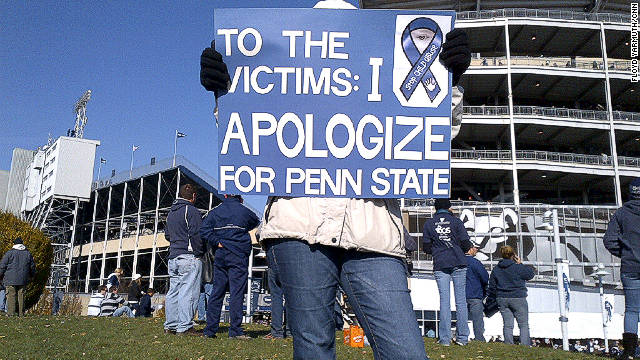
Pathological Systems and Penn State


By Sandra Brown


The nation is aghast at the Penn State sexual abuse/rape and subsequent cover up of the repeated assaults of young boys over a 15 year period. This case reminds us that even the most loved of places, those with the best of reputations, can have pathology coursing in its veins and leadership.

Jerry Sandusky a former coach is charged with sexual abuse of eight boys (and more victims stepping forward are expected). Tallying it all up currently includes 40 counts; 21 of them are felonies spanning 15 years of abuse having gained access to them through The Second Mile, a youth foundation he started ‘to help kids’. (Am sure the sexually abused children are saying ‘Gee thanks for that help.’)

Each of the 21 felonies carries 7-20 years and $15-25k fine with 19 misdemeanors carrying 2-5 years and $5-10k fine. Needless to say, the court rightfully so, finds the abuse allegations to be extensive. We can only guess how many rapes that accounts for over a 15 year span…and how many victims.

Mike McQueary, assistant foot ball coach witnessed at least one of the rapes in 2002 during which he watched, did not stop it, and did not immediately report it to law enforcement including campus police.

He did however pass the buck for reporting the rape by telling head coach Joe Paterno who also did not report to police, including campus police. A 23 page grand jury report said Paterno was told in 2002 about the sexual assault against an approximately aged 10 year old boy in the shower at the university. 

McQueary also passed the buck to Tim Curley, the athletic director and Gary Schultz the Senior Vice President (whose duties included the oversight of the university police) about the assault, none of whom also made the mandated child protective reports and reports to law enforcement.

Paterno’s defense to what he did not report was that McQueary was ‘distraught but didn’t tell me specific actions that occurred.’ There is no evidence that Paterno followed up to find what specific actions had occurred, or turned over the alleged ‘distraught’ concerns to child protective services or campus law enforcement.

All citizens are considered to be mandated reporters in child abuse cases and certainly university staffs are trained in reporting protocols for both the university and the state since they work with students. However, none of those protocols were followed and none of the mandatory reporting laws seemed to be applicable to them. You do not have to prove child abuse—you simply have to have a suspicion of abuse and then you are mandated to report. Child protection services and law enforcement will take it from there. 

A naked adult with a naked child is not a suspicion. That is a crime and a fact that is mandated, not only legally but ethically and morally.

Mike McQueary did not follow up checking with police or campus police to make sure Paterno, Curley or Schultz actually filed a report. While it is appropriate that he told others, it is not enough. The law is not ‘tell your boss and walk away’. It’s that you report. Whatever you do after that for ‘on the job’ notification to your superiors is separate and distinct from reporting. University staff is always trained in abuse protocols. It’s not that they didn’t know what they were supposed to do.

While being labeled as a ‘whistle blower’ about the university might be uncomfortable and a motivation for not reporting directly to law enforcement, it is not nearly as uncomfortable as being raped and scarred for life. It’s not nearly as uncomfortable as a child who knows you saw what happened to them in a shower and did not help them…in the moment or later.

Ramifications? Being labeled as a whistle blower, or being fired for covering it up—I mean ‘really?’ are we comparing those consequences with those of eight little boys whose lives were ruined from adults looking the other way. A job is equal to a rape in terms of ramifications? It was hid to save their jobs?

Let’s count here….

1.  Sandusky never confessed to what he had done to save himself from jail and keep a job.  Considering he’s a pedophile, not many were expecting him to have insight about how his behaviors were destroying someone else.

McQueary, a flicker of conscience…not in the middle of the rape, not even that evening as he went to bed…but the next day and a couple more notifications to others but not pushing the envelope enough to ask his superiors if they did something about his suspicions. Not wanting to incur the wrath of employers? Not wanting to seem outside of the good ol boy’s club that anything goes….job protection.

Curly never reported suspicions of abuse.

Schultz as a Senior Vice President and who oversaw campus police never reported suspicions of abuse. 


Who does that? Who places employment before anal penetration? Who places their football ego in front of oral rape? Who shows up year after year for work walking passed the showers where innocence was lost? Who oversees campus police and doesn’t make a report of suspicions? What kind of pathology does that? 

But instead, this moment of looking at not only individual pathology but corporate pathology is being lost. Instead of looking at the kinds of symptoms pathology perpetrates in the individual and in systems, we are instead hyper-empathically focused on micro issues: The ‘conflicted’ pedophile, the social psychology of why others look on and do nothing, the severe motivation of job loss at high levels, how well loved a coach is as evidence of guilt or innocence.

We miss seeing that when pathologicals are at the head guiding the system, they are making deep psychological imprints of their own pathological world views projected like a cult-reality on the screen of other’s psyches. That’s it not just an individual that can be sick, its entire systems that are guided by pathological and psychopathic belief systems. (Anyone ever read Snakes in Suits by the world’s leading expert in white collar psychopathic behavior, Dr. Robert Hare?) 

It took a system, not just an individual, to cover up 15 years of rape. It took the camaraderie of people who collectively had reduced empathy and conscience to hide the fact that little boys were penetrated, and kids were trafficked to psychopathic benefactors. Now there are allegations that the rape and assault of little boys were used as perks to pedophile benefactors.  It’s called human trafficking.

This did not happen in a vacuum as most trafficking, extended abuse, and cover up normally doesn’t. It takes individual and corporate pathology to create an environment of longevity and invisibility to perpetrate 15 years of rape. It takes pathology on many levels from being the pedophile to being a silent accessory to the crime to allow over a decade of soul destroying abuse in a psychopathic fraternity of football narcissism.

Systemic pathology has been seen through the years in the church, in the military, in the white house, in the FBI---in any large system. How did thousands come to believe that the holocaust was the right thing to do? It happened when one pathological in a system created a systemic belief system and brought into that system at high management levels other persons whose own pathology shared the basic core belief systems and those beliefs found their home and their spark with the pathological leader.

Think all of the players are not likely pathological? Want to split hairs about which Cluster B diagnosis they are likely to fall into and our inability to really diagnosis someone if they aren’t in front of us? I don’t. You can see from this case what happens when someone does not have enough empathy, enough insight into how their behavior affects others, enough guilt, enough conscience, or enough remorse. Whether the perps and accessories are cleanly in the ranges of secure diagnosis really doesn’t matter because even reduced amounts of these traits-of-humanity have caused pathological results in the lives of children. Here is an example when a Cluster B is really a Cluster F for everyone in their paths.

Pathology In Systems

The Psychopathic Checklist helps us view elements of pathology that can perhaps help us to expand the view to see pathology active not in just a person but in a system. I have check marked those that I think we can apply to the pathological belief system of the department/portions of departments that were involved. (Below is the Psychopathy Checklist- Revised created by Dr. Robert Hare). 

 Glibness/superficial charm (at least applicable to the charm and support and near-riots of the followers of Paterno).


Grandiose sense of self-worth (entitled to not follow the mandated reporting laws of child abuse)


Cunning/manipulative (the years this has continued is a tribute to cunning ability to hide it and/or manipulate others into not telling)


Lack of remorse or guilt
  • Shallow affect (genuine emotion is short-lived and egocentric) (unable to determine)
Callousness; lack of empathy


Failure to accept responsibility for own actions
  • Need for stimulation/proneness to boredom (unable to determine) 
  • Parasitic lifestyle (perhaps within a systems model type of approach)

Poor behavioral control


Lack of realistic long-term goals (lack of realistic long term outcomes of suppressing child abuse)
  • Impulsivity
Irresponsibility
  • Juvenile delinquency
  • Early behavior problems
  • Revocation of conditional release
Promiscuous sexual behavior
  • Many short-term marital relationships
Criminal versatility (lots of versatility displayed)


Acquired behavioral sociopathy/sociological conditioning (Item 21: a newly identified trait i.e. a person relying on sociological strategies and tricks to deceive) (developed within the context of a pathological system and leader).


Out of 21 items, 13 items if applied to the pathological system can be viewed checked off in the above list. That’s 65%.

Perpetration of Pathology By Non-Recognition

Hoping that the mental health system is going to jump in here and help with public pathology education? The perpetration of pathology invisibility is highly related to the lack of pathology education even within the mental health field. The inability to spot pathology in others, and certainly as we can see, the inability to spot it in systems, has kept the mental health field largely another system unable to identify it.

To the mental health field’s defense, Robert Hare (world’s psychopathy expert) calls these disorders the ‘disorders of social hiding.’ That is, they look normal in the context of their setting (especially when sprinkled in with more pathology that camouflages glaring overtness in any single one person). The more successful, wealthy, or well-liked one is, the less likely they are to be noticed as pathological. Mix it with the hyper-empathy and positive psychology approach of some clinicians and you have all the Kum-By-Yah’ness behind which pathology never gets pointed out and none of the forensic attunement that might help others learn from these examples of pathology.

My case in point, having started a discussion on several professional therapist forums, these are the responses that clue us in to whether the mental health field will lead us in the much needed public pathology education awareness field….

My posting was “Calling everyone who understand pathology: Do not let the Penn State teaching moment be lost in translation in words that do not teach pathology in action. This is not merely 'abuse' -- this is pathology in both those who did it and those who hide it. Who Does That? Help other see the Cluster B disorders in action. Use the real language!

The responses were:

I take exception to the use of Penn State being a teachable moment. It’s is my alma mater…1 football coach does not define the entire institution.”

IMO the abuser is less guilty than those who covered up.”

Perhaps we should discuss why people who knew did not act appropriately. What about these crimes (rapes) shut them down morally. Is something like this too overwhelming for the average person to deal with, thus they shut down?

As professionals we owe our clients to explore their case in all it's uniqueness and individuality….Why does this client have the craving for this abnormal sexual fondness of children?... we remain a blank screen on which the client can write the story of his life. As a professional I can see myself having empathy even with a pedophile… as for myself I am extremely disgusted with the persecutor and his helpers. “

The DSM can diagnose and predict and structure, but can not understand an individual's core conflict. This work can only be done one session at a time with compassion and lots if patience with our support as a holding environment.”

I agree that this is definitely a teachable moment for our students. If we talk about a possible diagnosis with the goal of building compassion, then I can get on board with that.”

In those statements is very little pathological identification (outside of pedophilia) especially in the accessories to the crime. While many of those accessories who turned a blind eye to the rapes are likely to be legally and criminally considered accessories to the crime, few of us are holding them to the same standard. We are interested in understanding them, not insulting an institution because someone attended there and seems to think this is a case about one coach and not all the other accessories—we are more interested in extending patience, support, compassion for the child rapist and accessories.  

I don’t see much interest in the world at large for exposing pathology for what it is so others can identify it in the future. If we don’t learn from what we have experienced, how do we bring that experience to light? I see little help in understanding pathology in corporate constructs or bilateral distribution of the crime of not reporting. Instead, the public outcry as witnessed on campus is a snapshot of the social investment to a perception—that there was one pedophile and that’s the end of the story.

From whom shall we look to understand personal and corporate pathology? Where shall our public pathology education come from?

Sandra L. Brown, M.A. is the CEO and Founder of The Institute for Relational Harm Reduction and Public Pathology Education.  www.saferelationshipsmagazine.com


Monday, October 4, 2010

Psychopaths/Sociopaths


By Heidi Hiatt

Last night on ABC, a Nightline Prime episode titled “Secrets of Your Mind” airedhttp://abcnews.go.com/Nightline/Prime/. I came upon it just as I reached for the remote to turn the TV off.

It was a thought-provoking show that sparked an interesting water cooler conversation today. Unfortunately, the show furthered a common myth about psychopaths, that “psychopath” is synonymous with “murderer”. The media and pop culture have limited our society’s understanding of this concept. Many people think that only ruthless dictators and serial killers can be psychopaths.

In reality, a psychopath is someone without a real conscience that lacks empathy and remorse. An estimated one in 100 to one in 25 people in the U.S. is a psychopath. This term is used interchangeably with “sociopath”, although there are differences (that I touched on in my Iago post). Psychopaths/sociopaths use and abuse other people without feeling guilty about it.

Most psychopaths and sociopaths in the news and literature are men, but both men and women can be one. Sometimes men are the more obvious candidates. Male sociopaths are more likely to use physical as well as mental tactics to use and maintain control over someone. But female sociopaths are just as capable of using head games to use and control people, including through sex, seduction, and feigning helplessness and reform. People are less likely to realize when they are dealing with a female sociopath because of widespread stereotypes.

In his book, Without Conscience, Dr. Robert Hare says that, “Psychopaths are social predators who charm, manipulate, and ruthlessly plow their way through life, leaving a broad trail of broken hearts, shattered expectations, and empty wallets. Completely lacking in conscience and feelings for others, they selfishly take what they want and do as they please, violating social norms and expectations without the slightest sense of guilt or regret.”

Someone this callous should be easy to spot, right? WRONG. That’s what makes them so dangerous. Some of the most convincing psychopaths/sociopaths are the most “Christian”, charismatic, caring, daring, sexual, and magnetic people you will meet. They are so good at what they do because they instinctively, even effortlessly, convince others that they are someone you want to marry, work for, or otherwise forge a bond with.

These people, who author Sarah Strudwick calls dark souls, gravitate towards children of light (John 12:36). They use you as a power source to compensate for their own internal wasteland, feeding on your goodness and generosity. It thrills them to corrupt your morals and bring you down to their level. Draining someone else and ruining other people’s relationships makes them feel powerful. As I said in another post, being a vampire is not a part-time job for them, it is who they are, and they may not even realize what they do.

Obviously there can be a spiritual influence at work in such people, and so psychological and biological explanations may only account for part of their problem. God does not function on deception, guilt, and manipulation, but honesty, grace, and love, so if you see the former, it’s not coming from Him. It should not be surprising that people may get a strange vibe from those without conscience; even if they find the person attractive or intoxicating, they often notice that there’s something strange about their eyes. I’ve heard it described as eyes like a shark, snake, or goat, “black eyes”, looking hollow, looking like nothing’s behind their eyes, and looking like something’s missing.

Something is missing. A real conscience. Because they instinctively watch and mimic other people’s behavior, they can seem like they have one. They can act like they feel the love and emotions that others do, but some argue that they are incapable of having any authentic emotion, devotion, or spirituality. Their actions, however, will eventually prove to be inconsistent with normal or healthy human behavior. Ultimately they are all about themselves—how they can conquer, how they can win, how they can get what they want regardless of the cost to anyone else.

Most psychopaths and sociopaths are not in prison. They are right here in everyday society with us. They can be our friends, relatives, spouses, coaches, bosses, parents, and just about anyone else. Your conscience may start nagging you when you start getting used by these people, but they can have a frightening hypnotic power that makes it inexplicably difficult to break free from them. You may not think you can break free because of their relationship to you—they may be someone you have to keep some degree of contact with.

If you’d like to know more about how to protect yourself and your loved ones from these predators, feel free to watch the following videos and check out these books. Sandra Brown’s website is also a great resourcehttp://saferelationshipsmagazine.com/.

Please remember that the lack of literature on female psychopaths/sociopaths does not equate to the lack of such people in our society. Trust me, they’re there, and they often disguise themselves with benevolence and devotion. I have had more experiences with people without conscience than I care to disclose on a public blog, and I can assure you, the consequences have been life-changing.

If you educate yourself about these types and keep an eye open for their snares, you may soon become adept at spotting possible soul-suckers. I advise people to use the words psychopath and sociopath sparingly because sometimes only an expert can tell what someone is for sure, and conditions like narcissism, borderline personality disorder, and antisocial personality disorder frequently overlap with them. But ALWAYS be on the lookout for these people. Sometimes they’re exactly where you least expect to find them, especially when it’s someone you’ve known for a long time.

Videos

The Sociopath
*Please note: the financial irresponsibility mentioned in this video is one possible sign of a psychopath, but I’ve seen repeated cases in which suspected female psychopaths are excellent with money, one of their more endearing traits.
http://www.youtube.com/watch?v=hApXfhlQono

Psychopaths Among Us: Australian Broadcasting Report
http://www.sott.net/articles/show/201472-Psychopaths-Among-Us-ABCReport

How To Spot a Dangerous Woman – Author and former BBC reporter Roy Sheppard
http://www.youtube.com/watch?v=NeeZSXY_swo&feature=related

Tactics of Manipulative People – Bill O’Reilly (who hardly let the other man speak) interview with Dr. George Simon
http://www.youtube.com/watch?v=GVb1xKGibBA&feature=related

This clip is titled Antisocial Personality Disorder, but is about psychopathy
http://www.youtube.com/watch?v=WftbmbVYiCk&feature=related

Dr. Robert Hare’s “corporations” analogy for psychopaths
http://www.youtube.com/watch?v=ui9C6xVpVf0

Books

How to Spot a Dangerous Man Before You Get Involved, Sandra L. Brown
http://www.amazon.com/How-Spot-Dangerous-Before-Involved/dp/0897934474#_

Without Conscience: The Disturbing World of Psychopaths Among Us, Robert Hare
http://www.amazon.com/Without-Conscience-Disturbing-World-Psychopaths/dp/1572304510/ref=sr_1_1?s=books&ie=UTF8&qid=1282972041&sr=1-1

Snakes in Suits: When Psychopaths Go to Work, Paul Babiak and Robert Hare
http://www.amazon.com/Snakes-Suits-When-Psychopaths-Work/dp/0061147893/ref=sr_1_1?s=books&ie=UTF8&qid=1282972072&sr=1-1

Women Who Love Psychopaths, 2nd Edition, Sandra L. Brown
http://www.amazon.com/Women-Who-Love-Psychopaths-2nd/dp/0984172807/ref=sr_1_1?s=books&ie=UTF8&qid=1282971995&sr=1-1

The Sociopath Next Door, Martha Stout
http://www.amazon.com/Sociopath-Next-Door-Martha-Stout/dp/0767915828/ref=sr_1_6?s=books&ie=UTF8&qid=1282972138&sr=1-6

Emotional Blackmail: When the People in Your Life Use Fear, Obligation, and Guilt to Manipulate You, Susan Forward and Donna Frazier
http://www.amazon.com/Emotional-Blackmail-People-Obligation-Manipulate/dp/0060928972/ref=sr_1_39?s=STORE&ie=UTF8&qid=1282972238&sr=1-39

In Sheep’s Clothing: Understanding and Dealing with Manipulative People, George K. Simon
http://www.amazon.com/Sheeps-Clothing-Understanding-Dealing-Manipulative/dp/1935166301/ref=sr_1_1?s=books&ie=UTF8&qid=1282972328&sr=1-1

Venus: The Dark Side, Roy Sheppard and Mary T. Cleary (I have not read this, but it sounds like someone has finally come out with a book about female sociopaths)
http://www.amazon.com/Venus-Dark-Side-Roy-Sheppard/dp/190153412X/ref=sr_1_1?s=books&ie=UTF8&qid=1282972488&sr=1-1

The Gift of Fear and Other Survival Signals that Protect Us From Violence, Gavin de Becker
http://www.amazon.com/gp/product/0440508835/ref=pd_lpo_k2_dp_sr_1?pf_rd_p=486539851&pf_rd_s=lpo-top-stripe-1&pf_rd_t=201&pf_rd_i=0440226198&pf_rd_m=ATVPDKIKX0DER&pf_rd_r=1J6A0DZRFVEW6MFE5KKP

The Bible – the ultimate training manual on how to spot and deal with evil. God’s standards and designs are the litmus test for human behavior, and He can give us clear discernment. Jesus’ comments in Matthew 23:27 may well apply to those without conscience: “You are like whitewashed tombs, which look beautiful on the outside but on the inside are full of dead men’s bones and everything unclean.” I always recommend the NIV and The Message versions as they seem to be the most true to modern language.
http://www.biblegateway.com/

*************************************************************************************

The world is a dangerous place to live; not because of the people who are evil, but because of the people who don’t do anything about it. –Albert Einstein

Enhanced by Zemanta
Related Posts Plugin for WordPress, Blogger...

Disclaimer

The opinions and information expressed in the individual posts do not necessarily reflect the opinions of each contributor of "Time's Up!" nor the opinion of the blog owner and administrator. The comments are the opinion and property of the individuals who leave them on the posts and do not express the opinion of the authors, contributors or the blog owner and administrator.