Showing posts with label Unsolved Crimes. Show all posts

Wednesday, March 16, 2011

The Case of Nikki LaDue January


By Dennis Griffin

Nichole LaDue January was found dead of a gunshot wound to the head on the balcony of her third floor condo in Pass Christian, Mississippi, shortly before 10 a.m. on July 29, 2002. Rigor and lividity indicated that the 30-year-old had been dead for several hours. Her death was ruled a suicide. 

Nikki had been married for less than two years to Phil January, and both worked at the Grand Casino in Gulfport, LA. According to Nikki’s friends, Phil was a jealous and controlling husband. Her co-workers told the LaDue family that their formerly fun-loving daughter had become a loner, afraid to socialize on breaks because Phil had spies watching her. However, she did have something wonderful in her life – a five-year-old son, Zachary, from a previous marriage. She loved Zack with all her heart. At the time of her death, Nikki was at a point of transition. Phil had suddenly decided they should relocate to Bossier City, LA, where he had found a job with Boomtown Casino’s security department working under his former boss at the Grand. Nikki had stayed behind to orchestrate the move. She told Phil that on July 29 he should drive to Pass Christian, rent a U-Haul and move the family’s belongings to Bossier City. She’d have everything ready to go. Nikki and Zack would then drive to Fort Lauderdale in Nikki’s car to spend a week with the LaDues. They would then join Phil in Louisiana.

However, Nikki had a different plan known to only a few people. She believed her marriage to Phil was over and she had no intention of joining him in Louisiana. She and Zack were going to remain with her family in Florida and start a new life there.  According to friends who knew of Nikki’s plans, she seemed both exhilarated and nervous. She was excited about going to live with her parents, but she also seemed scared. She and Zack slept at a friend’s place because she was afraid to spend nights alone in the condo. She also asked a male friend to show her how to use a pistol, because she wanted to be able to protect herself. That seemed to be an odd request since Nikki was known to be terrified of guns.  On July 28, the day before Phil was to arrive with the U-Haul, Nikki apparently decided to treat herself to a preview of her new life as a single woman.

She deposited Zack with a sitter and went on a date. She and her new friend, Eric, went to a club and then to his apartment, where he introduced her to some of his friends. From there they went to a sports bar. 

Meanwhile, Phil’s calls were piling up on Nikki’s voice mail. He even placed a frantic call to one of Nikki’s friends at work to find out where Nikki was. At about 8 pm, Nikki looked at her watch and exclaimed that she had to make a call immediately. She refused to use Eric’s cell and called from a pay phone. When she returned to the table she was visibly shaken and stated she had to leave right away. That was the last time Eric saw her alive, though they did speak one final time at 12:30 am, when she called his cell phone to swear him to secrecy about their day together. Nikki collected Zack and returned to the condo.

The calls from Phil continued, eighteen in all. Phil subsequently identified those calls, made between 11 pm and 2:30 am, as a lover’s spat. He told police that he said some hurtful things to Nikki that might have caused her to search the condo for his gun so she could take her own life. Months later, the detective in charge of the case told Nikki’s family that this statement by Phil was the basis for his conclusion of suicide.

According to Nikki’s family, Phil also told police that he was a 20- year veteran of the police force in Wichita Falls, Texas. They contend that was a total lie and that Phil was never employed by any police department in Texas. When one of Nikki’s friends arrived at the condo at around 9:30 am on the 29th to help load the U-Haul, she was let in by Zack. He said his mother was sleeping in the bedroom. The friend said she searched the condo twice for Nikki, but never looked out on the balcony. Minutes later Phil arrived and discovered Nikki’s body.

Nikki’s family has questions about the police investigation and the ruling that Nikki committed suicide. They include: Phil never provided proof of his whereabouts the night of July 28, or explained why he blocked the phone records from showing where he was calling Nikki from. They believe he might have been en route to Mississippi, but it is possible that he was already there and Nikki didn’t know it;  Nikki was found in a chair with her right knee held by the table in front of her and her left leg down. Phil, the person who found her, has stated in writing, “The gun was sitting beside her on a small padded wicker stool with rod-iron railing.” However, the police photo shows the pistol on the chair, under Nikki’s left thigh. They wonder how Nikki was able to shoot herself in the temple and then place the pistol under her thigh;

On the table next to Nikki’s body was a pack of her Marlboro Medium 100’s. But they were to her left, not to the right where a right-handed person would normally place them. On the far side of the table was a pack of Marlboro Red 100’s with a lighter beside them. This second pack could indicate the presence of another person; There was also a portable phone, face down on the table, covered with blood.

A pathologist was hired to do a private autopsy and told the LaDue family that Nikki died instantly. If so, who bloodied the telephone? The police failed to collect the phone or lighter as evidence; The bullet that entered Nikki’s right temple exited through a tiny hole above her left ear. Allegedly it then hit the wall 5 feet 6 inches from the floor and 18 inches to Nikki’s left, ricocheted into the aluminum doorframe on the same wall, and then bounced back to land in a chair on the next balcony.

Police took no scene photos to document those facts. It seems strange that the exit wound was so small that three different funeral directors were unable to locate it, yet the bullet continued to travel at such a speed as to hit a wall, travel to the door frame, and have enough momentum left to fly back over Nikki’s head and land on a balcony six feet away. There is no police diagram of the path of the bullet, just a verbal description; and: would Nikki take her own life while the 5-year-old son whom she adored was in the same apartment?  Would she leave him all alone knowing he could possibly discover her body?

The family doesn’t believe she would have. For the LaDues, the questions are many, but the answers are few.

The case of Nikki LaDue January was discussed on Crime Wire Radio, Tuesday, March 15.  Her mother Bonnie was a guest.

      
Listen to internet radio with Denny Griffin on Blog Talk Radio


Sunday, February 20, 2011

Randy Wayne Leach: Still Missing


By Dennis Griffin

Randy Wayne Leach and his car, a 1985 gray Dodge 600, disappeared from Linwood, Kansas on the night of April 15/16, 1988, following a pre-graduation party at the home of Kim Erwin in rural Linwood. He was 17 years old.

According to his family, Randy, an only child, wasn’t selfish or self-centered. He was always willing to help others and do what he could for neighbors, friends and family. He was an upbeat, clean-cut and normal boy.
Although Randy never acted like he cared for school, his grades didn’t show it. He was always an honor student, or honorable mention as a B-student. He never had to study much to keep up.

His senior year could have been finished with an early out in January, but his parents, Harold and Alberta, talked to him and he decided to enjoy his last semester of the senior year. For a graduation present, his parents bought him the car of his dreams—a restored 1966, cherry-red Mustang.

Randy planned to earn some money mowing grass the next summer and help around the home doing odd jobs and possibly going to a trade school of some kind. He made no long-range plans, just wanting to enjoy the summer.

The day before Randy disappeared, he and his dad purchased a brand new John Deere lawn tractor for Randy’s summer jobs. Randy took the new mower and mowed four and a half hours on a contracted job in the afternoon. He came home then and mowed the family’s front lawn.

When Randy got ready to go out on April 15, 1988. His dad asked him if he had enough money. He said that he had enough, but if he dropped by Wal-Mart or K-Mart, he would like to get a bottle of water glass wax to put on his new tractor to hold the paint. The cost was around $15. Harold gave him a twenty. That gave Randy a total of approximately $50 to $60. He left in the family car, a gray 1985 Dodge 600, four-door sedan with license plate number LVJ 8721. The time was approximately 6:45 p.m.

Randy eventually went to Linwood and rode around town with Steve Daughtery. When later interviewed, Steve said he bought a six-pack of beer, but Randy declined to have any. The two drove to DeSoto at about 8:30 p.m. They went to the body shop where Randy’s Mustang was being restored. Randy took Steve to show off his car. The man at the body shop said that they were drinking beer and offered some to Randy, but Randy turned it down again.

By 9:30, Randy and Steve were back in Linwood, where Randy dropped Steve off. Randy went to Stout’s Corner, a convenience store. Four or five people reported having talked to Randy there. They all said he was joking and acting normal. He bought two candy bars, two Pepsis, and $3 worth of gas. It was Randy's habit of putting back into the vehicle the gas that he thought he would use in an evening. Therefore, the family didn’t think he planned to travel very far.

Randy went to the party between 9:45 and 10:00. Randy's cousin and others who were at the party said Randy could hardly walk. The cousin later stated that Randy didn't smell of alcohol and he didn't think Randy was drunk.

So what happened to Randy in the 30 or so minutes from when he was acting normal at the convenience store and when he was observed at the party barely to walk? One story that subsequently circulated is that someone put a drug called Thorazine in Randy’s drink at the party. However, it turned out that the person suspected of spiking Randy's drink wasn't at the party.

A friend of Randy who arrived at the party at midnight, later said he was around Randy off and on. He didn’t see him drink anything, but Randy wasn't acting right.. At one point, he said, “Randy, what’s wrong?” Randy said, “Man, I don’t know what’s wrong.”

Another friend, James Burns, reported helping Randy to his car at 1:30 a.m. Unable to find the car keys, Randy laid down in the front seat. James went with his brother, John Burns, to give a girl a ride home who'd had too much to drink. When they returned between 2:00 and 2:10 a.m., Randy and his car were gone.
However, two other people said they saw Randy at the Erwin house as late as 2:15, waiting in line to go to the bathroom. Mrs. Erwin said she told him to go outside, claiming she didn’t want him to fall in the house and hurt himself.

At 6 a.m., Randy’s mom awoke to find Randy missing. The panicked parents were barefoot in the driveway, when Harold spotted Steve Daugherty drive by their house on Highway 32. Harold later said that it seemed odd because it was so early Saturday and Daugherty was only driving, “about 10 miles per hour,'” where the posted speed limit was 55 mph.

After Harold and Alberta reported Randy missing, a massive air, river and ground search was launched. But neither Randy or the car were ever found.

Following Randy's disappearance, rumors swirled. According to one of them, there was another young man with Randy when he stopped at the convenience store at 9:30 p.m. The man was identified by witnesses as Jim Hadle - possibly spelled Hadley - who was Steve Daugherty’s roommate. Hadle was reportedly seen sitting in Randy's car. Word got back to the Leach family that both Daugherty and Hadle were drug users who had spent time in jail. Harold Leach contends that investigators never talked to Hadle. And that when Hadle later came to their house, he denied even knowing Daugherty. Both Hadle and Daugherty subsequently passed away, supposedly of natural causes.

As time went by, Internal police reports about Randy's case began showing up in the Leaches' mailbox. Harold says he doesn't know the source of the documents, but believes they were from sympathetic officers who were convinced the investigation was botched.

In 1993, a man purporting to be a "research journalist" offered his assistance to the Leaches and spent several months without pay interviewing partygoers and others who might have known something about the case. The man went by the names of Terry Martin and Lee Harper. Martin/Harper pooled information with Leavenworth County Sheriff's Detective Dawn Weston, whom had been assigned to review the case.

Executing warrants issued by the assistant Leavenworth County Attorney, Weston arrested three men for the alleged kidnapping and murder of Randy Leach. The men were quickly released. The sheriff explained, "She was a new investigator and overzealous, so to speak. It didn't pan out when the evidence was double-checked by the county attorney."

As of this writing, Randy Wayne Leach remains missing and the case is cold. Someone still alive knows what happened to him on the night of April 15/16, 1988. If you are that person or know who is, it's time to step forward and help bring resolution to the Leach family.

If you have any information about this case please contact Leach family spokesperson Cindy Hutchison at cindy.hutchison@yahoo.com.

Friday, February 11, 2011

AN UNFORGIVABLE CRIME – The Donna Jou Story


By Cynthia Caron

Beautiful Donna Jou, age 19, pushed aside her college books and decided to grab a quick bite to eat. The beautiful 78 degree weather that June day in 2007 made indoor air conditioning feel refreshing. Donna, an honor roll student on the Dean’s List at San Diego University had decided that she needed to be ready to meet with a young man named Sinjin Stevens whom she had exchanged email messages with since late May, early June. Donna met Sinjin on Craigslist where she advertised as a Math Tutor to help earn extra spending money during her own college days. This was not unusual for Donna as she always volunteered or helped others since her early teen years.

Donna graduated from Clear Lake High School in May 2006 with a GPA of 4.4 and SAT scores of 1,570.
She was tutoring mathematics during her last two years of high school and donated over 100 hours of her time to help her fellow students. She also worked full time as a volunteer in St. John Hospital's Pathology Laboratories under direction of Dr. Moore in the summer of 2005. Donna had a fondness for all people in need so it was very proud moments for her family to know that she also supported the Interfaith Ministries as a volunteer including collecting nonperishable foods from grocery stores and delivering to food pantries for those less fortunate. That was who Donna was. A caring person who always wanted to do well and help others.

She also was quite brilliant. During her senior year at Clear Lake High School, she took a course named "Independent Study Mentor ship” under the direction of her mentor, NASA Senior Scientist,Dr. Deborah Harm. Donna studied Neurophysiology, Vestibular System, Spaceflight and negative effects on astronauts' balance upon their return to earth at the National Aeronautics and Space Administration (NASA) in the Johnson Space Center ,Houston, Texas. Shortly after she was admitted to the NASA's Summer High School Apprenticeship Program. As well as baby sitting for the Battered Women Shelters, she has volunteered as a cashier in the Bay Area Turning Point Resale Shop in Nassau Bay, Texas in support of women shelters. The pretty teenager had a full life and many happy days to look forward.

Most importantly, Donna’s dream was to become a Neurosurgeon. However, that was not to become. Her life was cut short on that beautiful evening of June 23, 2007. All dreams and ambitions came to a halt that eve, while her parent’s and sibling’s nightmare began.

Around 5:30 p.m. Sinjin Stevens showed up to pick up Donna on his motorcycle. However, he was not named Sinjin and was actually a man named Steven Burgess, a convicted child molester who was supposed to be registered in the state of California.

Donna grabbed her books and hopped on the back of Burgess's 1981 Yamaha motorcycle outside her Rancho Santa Margarita apartment. At the same time, her family leaves for dinner and watches the motorcycle exit the 241 at Portola. At 6:08 p.m., Nili Jou, Donna’s mother, receives a text message from her daughter's cell phone that read "Battery's dying. I'm in San Diego. Be home soon. I love you Mommy.” She smiled as she set her cell phone down. She knew her daughter was very responsible and still loved when she called her “Mommy.” However, as any mother will tell you, a deep nagging thought bothered her and she couldn’t quite put her finger on it.

The next morning Donna was due to be at her classes and at work. She did not show up. Friends looked around and realizing that Donna was not in class began to worry. Donna always texted her small circle of close friends and had she been ill, she surely would have sent them a message. At the least, the young responsible young woman would have asked her friends to gather her needed assignments. When Donna did not show up to work it was a certain sign that something was not right. Upon realizing that she never came home Donna’s parents began making frantic phone calls looking for her. They immediately filed a report with the local police department. Fear gripped their hearts. Maybe she lost track of time? Perhaps she and the man she was to tutor were in an accident? No matter the thoughts none were good. As the days moved forward without their beautiful daughter and sister, Donna’s family was in a terrible state of shock. How can their daughter just disappear from the face of this earth? If ever a responsible and wonderful person, why their beautiful child? Where was Donna?

The Orange County Sheriff's Department began their search of Donna’s computer and entered her into the NCIC FBI database for missing persons. An intense investigation began and soon Sheriff's officials narrow their search to a man named Steven Burgess aka Sinjin Stevens. The license plates and descriptions of his Ford Ranger pickup and motorcycle are publicized as well as his photograph. It was soon discovered that Burgess’s roommates reported seeing him pack up his truck with cardboard boxes and that was the last they saw of him. A few days later, a citizen finds a plastic tool box stuffed under bougainvillea vines about a mile and a half from Burgess's house. Inside the box are the vanity license plates "SINJIN 1" from Burgess' truck, a black motorcycle helmet, rubber dishwashing gloves, rope and a scrub brush. The family’s heart was gripped in a state of shock. Could he have abducted Donna and taken her somewhere? Is she drugged and tied up? They were relentless and would not sleep and barely ate and would not until their child was safely brought home.

On July 9, a little over two weeks since Donna became missing, the Orange County sheriff's investigators and members of LAPD's Robbery and Homicide Division
return to Burgess' house and spend hours interviewing his roommates and searching the property.
Several knives are found in a backyard cabinet and were processed to be tested for blood residue. Meanwhile missing posters have been hung in every possible high-trafficked area hoping that someone will recognize Donna and have the needed answers for her return home. There was very little doubt in the minds of the investigators. Donna was not going to be home safely.


Steven Burgess

Investigators worked around the clock to locate Steven Burgess and soon found him in Florida. He was extradited to Los Angeles and booked into the LA County Jail. Bond was set at $250,000.00 on a host of charges. Burgess was able to make bail and proceeded to flee the state of California. On September 30 he was once again located in Florida under an assumed name of Logan Anderson. He had a fake ID, drivers license and social security card. He was extradited once again back to Los Angeles where his bail was now set at $500,000.00. Because Burgess was supposed to be registered as a sex offender; and did not, along with other felony charges, on October 10 he was sentenced to 3-years in prison. None of the charges related to the disappearance of Donna. Ongoing searches for Donna was conducted and led by the Trinity Search and Rescue team. They searched, along with over 198 volunteers, the Santa Monica mountains for any signs of Donna. She was never located.

A full year went by while Burgess served time in the California Correctional Institute and a Grand Jury investigation was called and throughout the process it convened with a confession from Steven Burgess. On March 14, 2009 Burgess released from Prison (for charges un-related to Donna), was re-arrested and brought to LA county Jail to stand charges related for the disappearance of Donna. He was arraigned & charged with killing Donna Jou, bail set at 1,000,000.00. Donna’s family retained the famous lawyer, Gloria Allred and while they had excellent representation Steven Burgess chose to dismiss his lawyer and represent himself at trial. Burgess was brought to court, he signed the paperwork to represent himself and waived his right to an attorney.

On May 06, 2009, further trauma was added to the heartache and pain of losing their beautiful daughter as Steven Burgess pleaded guilty to Involuntary Manslaughter and Concealment of Accidental
Death and claimed that Donna died during a self administered accidental drug overdose and that he panicked and dumped her body into the Pacific Ocean. Due to the fact that no body was found, to prove or disprove his story, he was sentenced to only 5 years in the state prison and 3 years probation! Groups marched outside the courtroom for justice but justice was not to be served!


Protesters demand to know “Where is Donna?”

The family and friends of Donna were horrified! They knew that their daughter never would have taken drugs willingly and certainly would not have joined in any type of “partying” and her death was no accident! Donna’s father, Reza Jou, hired an independent team to do water searches hoping to find the earthly body of his daughter to bring her home for a proper burial. Donna’s mother lived in a state of shock. How can the very same system that she swore to uphold while making her American Citizenship fail them?

Donna’s family live with the pain every day since that awful morning of June 24, 2007 when they realized their child was missing. Compounding that grief was the injustice that the very person that Donna set out to tutor, who in their eyes and in the eyes of many, was clearly responsible for them to never see Donna’s beautiful smile, her happy disposition and her kind and caring soul ever again. Further adding to the horror and pain, it was learned that of the 5 years sentenced that Burgess would be released, on good behavior, two full years before his five year sentence was completed. This was determined without a parole hearing and was automatically granted.

Steven Burgess is due to be released in April 2011. In a public letter to his daughter, Donna’s father writes “I have and will continue to do whatever is necessary to maintain my strength and courage throughout this ordeal. While I have many days when my world seems to be spinning out of control, I counter that with a sense of hope that you will still one day return to us. Even against all odds and even when things seem not to be going our way, I keep in my memory and I know in my soul that miracles really do happen and that justice will ultimately prevail.”tat


Donna and her father, Reza Jou
Donna and her mother, Nila Jou


How much more pain can this family endure? In my many conversations with Donna’s parents, one thing is clear. They will stop at nothing to be sure the public is aware that Steven Burgess is about to be released and warns that the residents of California needs to know that a cruel sick man is about to be released onto the streets to perhaps one day cause harm to another child. This is the outrage that they are facing and pray that no family ever has to experience what they’ve endured. They know that Steven Burgess may have    committed many more crimes that have not yet been reported and they ask if any young person, who now may be of age, to please come forward. If any victims of Steven Burgess, who may have been molested, to please come forward and make those charges public. It is known that a predator does not stop and that many victims are in the past of predators and molesters and if any those potential victims can find the strength to please come forward, Donna’s family needs you. They need all possible charges of crimes that he’s committed to be accounted for before he is released into the world to commit more monstrous crimes against others. They also ask if anyone has viable information on what happened to Donna to please contact authorities.


FURTHER INFORMATION CAN BE READ ONLINE AT: http://www.donnajou.com


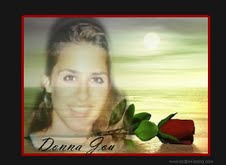
Donna Jou

$15,000 Reward for any information in finding Donna Jou.
If you have any information regarding Donna please
contact your local police department or call:
Los Angeles Police Department at 213-486-6900

Wednesday, January 26, 2011

Kaitlyn Arquette


By Dennis Griffin

At 6 p.m. on Sunday, July 16, 1989, 18-year-old Kaitlyn Arquette, of Albuquerque, New Mexico, who had recently graduated from high school and gotten her own apartment, stopped by her parents' home en route to visit a new girlfriend, Sharon Smith. Kait told her parents that Sharon had invited her for dinner and had given her written directions to her house in Old Town. Kait also said that she was breaking up with her live-in Vietnamese boyfriend, Dung Ngoc Nguyen, and if he called trying to find her, not to say where she was.
Kait kept her dinner date with Sharon and left her friend's home at 10:45 p.m. The Albuquerque police think that while driving east on Lomas Blvd. in the direction of her parents' house, she was shot twice in the head.  Her car jumped the median and came to rest against a pole at the intersection of Lomas and Arno Streets.  Kait survived 20 hours in a coma and died the next evening. 

The first officer to arrive at the scene of the shooting was an off-duty Albuquerque Police Department (APD) violent crimes detective, Ronald Merriman, who just happened to be passing by.  He reported that as he drove past he saw two vehicles parked on the sidewalk, Kait's red Ford Tempo and a second vehicle, which is not described in police reports, but which he later recalled to be a VW Bug. He also said he saw a man, later identified as Paul Apodaca, standing next to Kait's car. The detective radioed in to ask if a traffic accident had been reported at that location. None had. He returned to the scene and discovered an unconscious, blood-drenched girl lying across the front seats of the Ford.  According to Merriman, Apodaca explained that he was not involved and  had just stopped to see what had happened.

The first uniformed officer dispatched to the scene, Mary Ann Wallace, arrived within 40 seconds.  Wallace reported seeing only one vehicle on the sidewalk -- Kait's Ford Tempo, with Merriman standing nearby, talking with Apodaca – some years later Wallace “recalls” a VW Bug at the scene.   Wallace said the call had been dispatched as an accident without injury. But when she arrived on scene Merriman told her that an ambulance was enroute.  However, no record has been found of such a call.

Wallace and Merriman dispute each other about what happened next.  Wallace says Merriman gave her the identification information on Apodaca.  Merriman says it was Wallace’s responsibility to get that information.  In Wallace’s report, the identification information includes a name and age - but no address - and an incorrect telephone number. In later interviews, Wallace said that she felt something was wrong with the scene, but Merriman continued to “argue” that it was simply a car accident. Wallace says she called for a supervisor.  Merriman says he called for a supervisor.  The supervisor indicates she was requested by Merriman.  Apodaca later told others that he never saw or talked to Wallace. To this day, no police officer has ever interviewed Apodaca.  Nor have police questioned the disappearance of his VW Bug between the time Merriman saw it parked next to Kait's car and the time Wallace arrived.

In their accounts of what happened at the scene that night, Merriman and Wallace have stated that, accompanied by Apodaca, they opened the passenger’s door of Kait’s vehicle and observed a girl sprawled across the two seats, bleeding profusely from the head.  Wallace noted that the victim was “moaning and crying.”    

Not only are the recollections of Wallace and Merriman sometimes at odds with each other,  their versions are contradicted by responding medical personnel. For example, Merriman and Wallace indicated they were on the scene when rescue arrived. However,  medics with Albuquerque Ambulance, who transported Kait to the hospital, have stated in individual affidavits that they responded upon hearing that an accident had occurred – they were not dispatched to the scene.  As they arrived in the area there were no cops, police cars or bystanders present. They found Kait alone in her car, unconscious and bleeding from two head wounds. If the medics are right, the veracity of a statement made by Merriman that he couldn’t interview Paul Apodaca because he “had to stay with the victim,” becomes an issue.   

Officer Wallace has stated that Merriman told her not to interview Apodaca because he had already done so, and she busied herself “directing traffic.” Yet, according to the rescue team, she was not directing traffic, and in fact was not even at the scene when they got there. The medical team stated that they almost missed the scene due to the lack of a  police presence.

The contradictions of what took place at the scene aside, the police theory of the case in not entirely credible. They believe Kait was chased down on Lomas and shot twice in the head at a stoplight at the corner of Lomas and John streets. Her car then proceeded to travel 719 feet, cross two traffic lanes, go over the median, cross three more lanes, go up onto the sidewalk past the Arno intersection, and crash into a light pole. They say the location of the shooting was defined by a large pile of broken glass at Lomas and John.  However, evidence of that glass was never documented. It was not gathered up as evidence or photographed.

With no suspects and so many unanswered questions, the Arquette family launched their own investigation into Kait's murder. They and their investigator speculate that the crime scene may have been altered before police investigators got there.  The police criminalistics personnel arrived late because they had been busy at a police shooting.  According to their report, they were met at the scene by a Sgt. John Gallegos.  It appears that the initial information about the scene was based upon information from Gallegos rather than personal observations or investigation. Sgt. John B. Gallegos was subsequently fired from the department for burglarizing a liquor store while on duty. 
  
In 2003, after reviewing copies of APD reports, forensic reports, scene photos, etc., a member of the Bernallilo County Cold Case Squad came up with the following interpretation of the crime scene:
On the basis of review of available material in the matter of the death of Kaitlyn Arquette, the following observations are made (emphasis added):

1) This was not a random drive-by shooting
2) The shooting occurred after Kaitlyn's vehicle had struck the utility pole
3) The accuracy of the shots suggests they were fired at a very close range, at a non-moving target.
4) Had the shooting taken place while the victim's car was in motion, it would have veered to the right of the roadway due to the left-to-right camber of the pavement.  Also, the victim's falling to the right would have turned the steering wheel in that direction if she was grasping the steering wheel at the time of the shooting.
5) Damage to the left end of the rear bumper suggests the rear of her vehicle was struck and pushed to the right by a second vehicle which veered her car across the median and into the utility pole.
6) This shooting was intentional and Ms. Arquette was the specific target

According to Kait's family, at the time of her murder Kait was in a position to have information relating to Asian criminal activity in New Mexico and California, drug smuggling, drug activities involving New Mexico VIPs, and police corruption. They believe that knowledge and her  potential as a whistleblower may have cost Kait her life.

Kaitlyn's murder remains an unsolved cold case over 21 years after her death. Although the  police investigation went cold, Kait's parents, Don and Lois Duncan Arquette, didn't give up their hunt for their daughter's killer. They created the Real Crimes Website - http://www.realcrimes.com - on which Kait's and many other unsolved cases are posted. And they continued to work tirelessly to develop information.

This case needs to be solved and the responsible person or persons brought to justice. Somebody knows who killed Kaitlyn Arquette. It's time for anyone with information to come forward and help bring this case to resolution. If you know anything at all about who murdered Kait, please contact Crime Wire at thecrimewire@gmail.com.

On January 25, the Crime Wire Team talked with investigators and the parents of Kaitlyn Arquette.  You can listen to the interview here:


Friday, January 29, 2010

The Use and Misuse of 911 Recordings


By Angela Dove


“Disgusting”


“Completely inappropriate”


“Immoral and tasteless”


This is just a sampling of more than 150 reader responses to the article, “Brittany Murphy’s Mom’s hysterical call to 911” on People.com. On January 8, the entertainment magazine published audio of Sharon Murphy’s call to an emergency operator as her daughter, actress Brittany Murphy, lay dying in the actress’s California home. The move prompted immediate backlash from readers who vowed to boycott the magazine and told online editors, “You should be ashamed of yourselves.” None of the comments criticized the accompanying article, which included heartbreaking quotes from the call; instead, online users were united in their belief that encouraging the public to listen to a mother live through the worst moment of her life is despicable. Within 48 hours, the magazine removed the audio file.


While I agree that it is unpardonable to parade a family’s pain under the banner of entertainment, I am nonetheless intrigued by the power of such recordings. With—and only with—the family’s permission, a 911 recording can be an effective tool, particularly during the investigation of an unsolved crime.


It was for my family.


When my stepmother, Debi, was murdered in 1988, police were unable to make an arrest. Debi’s mother began a relentless media in hopes of bringing forward an informant. During the ensuing nine years her efforts landed Debi’s case on numerous true crime shows, most of which I avoided watching. There was one time, however, when I accidentally caught part of a show (I won’t mention any names) and watched in morbid fascination as several detectives offered a condensed version of the case: Debi was murdered in our house with a knife from our kitchen, my father found her the next morning, my baby sister slept through the attack just a few feet away, and there was no sign of forced entry.


By the time this show aired, Debi’s murder had been unsolved for more than a year, and I had moved across country in part to get away from the celebrity that comes to survivors of unsolved crime—relentless media aftershocks that can bring new devastation to lives already in ruin. What I was not at all prepared for was the tape of my dad’s frantic call to 911. The crime show played the call, and the panic and desolation in my father’s voice winded me like a punch to the stomach. I stumbled to the TV set and turned it off, sobbing in my now-silent living room.


At the time, I felt my family had been revictimized by the show. What I did not realize, however, was that the same recording that sickened me had actually convinced others that my father was not Debi’s killer.


Because of my naivety (I was only a teenager when Debi died), or perhaps because of my grief, I had somehow missed the fact that many area residents, and even some members of law enforcement, suspected my father had murdered his wife. Sure, the spouse or boyfriend is always questioned first, but even a year after Debi’s death there were those who doubted my father’s innocence. But anyone who knew my father beyond mere acquaintance would have been hard pressed to listen to that call and believe him anything other than innocent. Perhaps, if it had been released sooner, my father would not have suffered such ostracism and hostility during his own grieving process.


Aside from testifying to the state of mind of those on scene, 911 calls strike a chord even with strangers. (Over 150 comments to People’s online editors—and those were only the ones who bothered to log into the site long enough to tell them off!) Who knows if one of those listening strangers may hold the key to solving a crime?


When Debi’s mother, Jacque MacDonald, waged a war for justice in front of the cameras, it was only because she believed that someone, somewhere, knew who had killed her daughter. “There was one person who knew,” Jacque says, “and my job was to get them to come forward.” Were they afraid? Or did they think their one little piece of information wasn’t important? Jacque knew she had to break down their reticence or apathy. So she and my father laid their pain out there to the public. Eventually, Jacque’s “one person who knows” came forward with the information we needed.


Today Debi’s murderer is in jail, and Jacque fights for justice on behalf of other victims and survivors through her radio and television talk show, “The Victim’s Voice.” Based in central California, Jacque continues to counsel survivors of unsolved crimes to use anything they have at their disposal—including 911 recordings—in their search for justice.


“Other people understand panic and fear and loss,” Jacque explains. “Maybe they’ve lost a loved one or a friend. So that tape makes a connection.” If the family is able to connect to their ‘one person who knows,’ as Jacque did, then a shared understanding of loss may convince the informant to come forward.


Again, I want to be perfectly clear that I do not support the hawking of other people’s tragedies. Whether it is a mother’s 911 call or photos of disaster victims, I abhor the way some news and/or entertainment venues package and sell the heartbreak of others. But in the wake of an unsolved crime, it may be that sharing a vulnerability with the public can lead to a strong personal victory.


***


Angela Dove is an award-winning columnist, speaker, and author of the true crime memoir, No Room for Doubt: A True Story of the Reverberations of Murder (Penguin/Berkley, 2009). She welcomes feedback at www.AngelaDove.com.
Related Posts Plugin for WordPress, Blogger...

Disclaimer

The opinions and information expressed in the individual posts do not necessarily reflect the opinions of each contributor of "Time's Up!" nor the opinion of the blog owner and administrator. The comments are the opinion and property of the individuals who leave them on the posts and do not express the opinion of the authors, contributors or the blog owner and administrator.