Showing posts with label Dr. Robert Hare. Show all posts

Tuesday, January 29, 2013

When You Know It’s Murder


by Heidi Hiatt


I was 10 years old the first time it happened.

She was found dead at a campsite in Eastern Washington.

I remember exactly where I was standing, what the weather was like, who was talking to me. I wasn’t sure how to respond. It was not surprising that the suspect was a family member in this case, but I was shocked at the brutal way in which she’d died.

The suspect was never arrested. They knew he did it, and eventually he was found dead somewhere himself, a topic for another time. But until I learned his fate from the lead detective decades later, that cold, vacant feeling never left me.

It was murder.

In this same time frame, a car plunged into a river and the only survivor was the father who was driving. His wife and children died. I remember them telling me, “he was reaching for a cracker.” I remember what happened in his life afterwards and why I regarded him with a growing suspicion.

He was never charged either. But even as a kid, even at that moment, my instincts would not allow me to dismiss those deaths as an unfortunate accident. The way the puzzle pieces fit together, the sequence of events– it didn’t work. But how, as someone so young, do you convince the adults or authorities that their puzzle pieces might be joined in the wrong places?

It could have been murder.

Fast forward far into the future as I’m standing outside a hospital entrance before a relative goes in for surgery. They spoke of a family friend. “He killed her and they think he’s coming here.”

That feeling again. That grey, creeping silent shadow that signals a life has been erased and one still among the living is responsible for it. It crawled past me, wispy like smoke in a shuddering paroxysm of slow motion.

The suspect did come here from two states away. He was apprehended two counties north after rolling his car. He left several children without a mother and also ended the life of the child still inside of her.

Murder.

In this case he was sent to a mental hospital, a controversial decision that didn’t sit right with me. There was no question he did it. But the fact that he had killed his own wife had that same haunting feeling as the times before it that I’d learned of homicides. It’s a gaping, all-encompassing silence where there should be no silence. It is a yawing void that has no bottom.

More years went by. Like a light slowly intensifying as if on a dimmer switch, to my horror I realized that an acquaintance was in danger of death. I told others, “I know exactly how they’re going to die.” I pointed out patterns of behavior and the abhorrent Munchausen’s by proxy signs that were so obvious to me but others didn’t even seem to notice. Once the victim tried to drop hints.

I almost vomited the day I found out how they died. It was just like I said it would be. The authorities said it couldn’t be proven. The very factors and timing that made it suspicious were also the reasons that there was little physical evidence to go on and an accident was believable. All the steps a calculating criminal would take to cover their tracks existed and were to me so ridiculously logical.

That specter slunk in again, that gripping puff of sulfur that settles into an instinctive gut feeling which silently screams, “this isn’t right.” Safety experts tell us to always trust that gut feeling even when it doesn’t make sense and can’t be rationalized. In times like this we may tune into the still, small voice telling us that things aren’t what they seem.

It is a sick, frigid, empty feeling when you know it’s murder but it can’t be proven or the person responsible for extinguishing other lives isn’t arrested and punished. Can you relate? You might risk everything you have, even your life, to expose the truth, but the needed evidence for a charge or conviction just isn’t there. It’s a horrible place to be, a faint stench of decay that never wanders far from the perimeter of your senses.

Part of what motivated me to earn a degree in forensic psychology was this repeated pattern in my life of learning of a suspicious death, or abuse, or fraud, and seeing the perpetrators evade justice. My prolonged and repeated experiences with narcissists and sociopaths who know how to hurt others but appear as beacons of light pushed me to this. Many times in childhood, even, I found myself in the maddening position of having enough information to make a coherent argument in defense of a victim, but not enough to stand up in the legal system.

In time I learned how to testify as an expert witness and build a good case, but that doesn’t help the uncanny number of instances in my life it seems that justice could have been achieved already if someone had delved deeper into these questionable circumstances. Perhaps the police did everything they could each time, or technology hadn’t caught up with the courts yet. But how different life could have been for people around me if I’d found a way to articulate my suspicions earlier.

A common denominator weaves its way through the violence and crime I’ve seen in my life. The type of person who usually gets away with harming others– who even gets away with murder– is the one who maintains the self-sacrificing external image that most people would never question.

They’re the “nice guy” or the “family guy” or the “saintly caretaker.” They are self-sacrificial to excess. Those unfamiliar with sociopaths or who don’t believe one could exist in their circles are quick to believe that these dark souls are simply who they pretend to be. Sociopaths work hard at public relations, constantly cultivating a persona that seems hard-working, caring, involved in their community, giving– whatever scores them points in their professional and social orbits.

Not only do these types ingratiate themselves to those who will blindly protect their false selves later, when some truth-seeker dares question their integrity, but they will do whatever it takes to grind their accuser into a pulp. Dr. Robert Hare describes this beautifully in his Snakes in Suits book. I was floored when I read that book– it described exactly what I’d been through. The closer I got to the truth in some of these situations, the more I was attacked and discredited so that no one would believe me if I tried to convince the legal system.

Sociopaths can and do kill to protect their alter egos. They can snuff out lives to get what they want, and who they want, and to ensure that the shadowy parts of their Jekyll and Hyde lives never see daylight. They are so utterly steeped in their false self that most people around them are convinced of their infallibility and goodness– they will readily join in the destruction of the “crazy” accuser who dares question their beloved saint.

In every case of alleged criminal activity, we must ask “cui bono?”– who benefits? Who has something to gain? Who has something to lose? What is the accuser gaining or losing by coming forward and standing against an alleged criminal? Is the alleged abuser or criminal fighting excessively hard against the person trying to put the blame on them, which could be a sign that they are hiding something? Why would someone risk so much to point out the sins of someone who seems so gracious and delightful?

To prevent dark souls from hurting or killing others, we have to be willing to look at each case objectively. We cannot rush to conclusions; we cannot function on assumptions. We need to be willing to investigate all possibilities, put all of those on the table, and take the time to connect the dots. Sometimes there are no dots to be connected, other times the dots can form a detailed picture of what actually happened.

Our society is quick to dismiss crime and violence because of a person’s job title, fame, or social status. In cases where it’s easy for a suspect to get sympathy, like the death of a loved one, we often let our emotions dictate our thoughts and convince ourselves that they are incapable of that level of depravity. We must listen to any pokes at our consciences, however, and then decide to examine these cases with reason and an open mind.

I can think of a number of cases in which a person’s death was ruled as suicide or as accidental instead of a homicide, but someone close to the victim is overwhelmingly convinced that the official record is not the true record. Talented investigators might have spent years working the case to arrive at their conclusions, but loved ones insist that they’re missing some of the puzzle pieces. I understand that. It’s why closed cases should sometimes be reopened and investigators should leave no stone unturned.

How different our world would be if everyone would find the strength to speak up about the nagging feeling that a death is more than it seems to be—and the authorities would at least listen to them. One of the most frustrating problems I have ever dealt with is trying to convince those in power to listen when I didn’t have tangible evidence to back up my theories. Or as a kid, trying to capture the attention of an adult who could right the wrong or protect those being harmed. Or as a civilian law enforcement employee, being cornered in the department hallway and having the words, “you have no idea what it’s like to be a cop” yelled into my face.

Knowing deep down inside that someone probably didn’t lose their life the way the official record said they did can be a lonely and tortured place. Sharing those suspicions can have a profound impact on how others interact with you, your safety, and even your livelihood. Personally I have faith that God will bring justice in His time and that even those who don’t get caught in this life will have to answer to Him in the end. There is peace in knowing that you’ve done what you can to expose the truth and God is in control.

Accepting some of these circumstances as “solved” though—it hasn’t happened yet. Perhaps we who question the “truth” are who God intends to bring justice through. There are times when I’m thinking through some of these cases and that old familiar translucent twilight sidles up next to me. In that particular kind of silence I’m reminded that something still isn’t right, and the truth might have yet to be found. It’s like a door hasn’t closed yet, or a window latch has come undone in a forgotten room and a breeze is rustling old, worn curtains that should have been taken down 30 years ago.

Pray for justice. Hope for solutions. Trust that God sees all. And if you, like me, find yourself nagged by the unsettling feeling that there is more to the story of someone’s death than you have been told, know that there are others who understand.


It turns out that an eerie type of chaos can lurk just behind a façade of order—and yet, deep inside the chaos lurks an even eerier type of order. –Douglas Hofstadtera

 
Heidi Hiatt, MA is as a Forensic Psychologist.  You can read more of her posts at her personal blog, Truth, Justice, and All-American Allergen-Free Apple Pie Straight Talk in a Crooked World

Monday, November 14, 2011

Pathological Systems and Penn State


By Sandra Brown


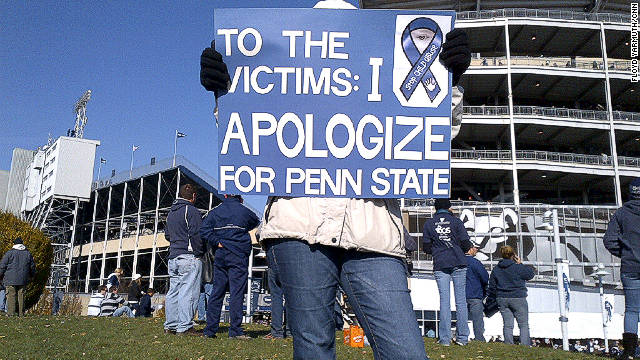
The nation is aghast at the Penn State sexual abuse/rape and subsequent cover up of the repeated assaults of young boys over a 15 year period. This case reminds us that even the most loved of places, those with the best of reputations, can have pathology coursing in its veins and leadership.

Jerry Sandusky a former coach is charged with sexual abuse of eight boys (and more victims stepping forward are expected). Tallying it all up currently includes 40 counts; 21 of them are felonies spanning 15 years of abuse having gained access to them through The Second Mile, a youth foundation he started ‘to help kids’. (Am sure the sexually abused children are saying ‘Gee thanks for that help.’)

Each of the 21 felonies carries 7-20 years and $15-25k fine with 19 misdemeanors carrying 2-5 years and $5-10k fine. Needless to say, the court rightfully so, finds the abuse allegations to be extensive. We can only guess how many rapes that accounts for over a 15 year span…and how many victims.

Mike McQueary, assistant foot ball coach witnessed at least one of the rapes in 2002 during which he watched, did not stop it, and did not immediately report it to law enforcement including campus police.

He did however pass the buck for reporting the rape by telling head coach Joe Paterno who also did not report to police, including campus police. A 23 page grand jury report said Paterno was told in 2002 about the sexual assault against an approximately aged 10 year old boy in the shower at the university. 

McQueary also passed the buck to Tim Curley, the athletic director and Gary Schultz the Senior Vice President (whose duties included the oversight of the university police) about the assault, none of whom also made the mandated child protective reports and reports to law enforcement.

Paterno’s defense to what he did not report was that McQueary was ‘distraught but didn’t tell me specific actions that occurred.’ There is no evidence that Paterno followed up to find what specific actions had occurred, or turned over the alleged ‘distraught’ concerns to child protective services or campus law enforcement.

All citizens are considered to be mandated reporters in child abuse cases and certainly university staffs are trained in reporting protocols for both the university and the state since they work with students. However, none of those protocols were followed and none of the mandatory reporting laws seemed to be applicable to them. You do not have to prove child abuse—you simply have to have a suspicion of abuse and then you are mandated to report. Child protection services and law enforcement will take it from there. 

A naked adult with a naked child is not a suspicion. That is a crime and a fact that is mandated, not only legally but ethically and morally.

Mike McQueary did not follow up checking with police or campus police to make sure Paterno, Curley or Schultz actually filed a report. While it is appropriate that he told others, it is not enough. The law is not ‘tell your boss and walk away’. It’s that you report. Whatever you do after that for ‘on the job’ notification to your superiors is separate and distinct from reporting. University staff is always trained in abuse protocols. It’s not that they didn’t know what they were supposed to do.

While being labeled as a ‘whistle blower’ about the university might be uncomfortable and a motivation for not reporting directly to law enforcement, it is not nearly as uncomfortable as being raped and scarred for life. It’s not nearly as uncomfortable as a child who knows you saw what happened to them in a shower and did not help them…in the moment or later.

Ramifications? Being labeled as a whistle blower, or being fired for covering it up—I mean ‘really?’ are we comparing those consequences with those of eight little boys whose lives were ruined from adults looking the other way. A job is equal to a rape in terms of ramifications? It was hid to save their jobs?

Let’s count here….

1.  Sandusky never confessed to what he had done to save himself from jail and keep a job.  Considering he’s a pedophile, not many were expecting him to have insight about how his behaviors were destroying someone else.

McQueary, a flicker of conscience…not in the middle of the rape, not even that evening as he went to bed…but the next day and a couple more notifications to others but not pushing the envelope enough to ask his superiors if they did something about his suspicions. Not wanting to incur the wrath of employers? Not wanting to seem outside of the good ol boy’s club that anything goes….job protection.

Curly never reported suspicions of abuse.

Schultz as a Senior Vice President and who oversaw campus police never reported suspicions of abuse. 


Who does that? Who places employment before anal penetration? Who places their football ego in front of oral rape? Who shows up year after year for work walking passed the showers where innocence was lost? Who oversees campus police and doesn’t make a report of suspicions? What kind of pathology does that? 

But instead, this moment of looking at not only individual pathology but corporate pathology is being lost. Instead of looking at the kinds of symptoms pathology perpetrates in the individual and in systems, we are instead hyper-empathically focused on micro issues: The ‘conflicted’ pedophile, the social psychology of why others look on and do nothing, the severe motivation of job loss at high levels, how well loved a coach is as evidence of guilt or innocence.

We miss seeing that when pathologicals are at the head guiding the system, they are making deep psychological imprints of their own pathological world views projected like a cult-reality on the screen of other’s psyches. That’s it not just an individual that can be sick, its entire systems that are guided by pathological and psychopathic belief systems. (Anyone ever read Snakes in Suits by the world’s leading expert in white collar psychopathic behavior, Dr. Robert Hare?) 

It took a system, not just an individual, to cover up 15 years of rape. It took the camaraderie of people who collectively had reduced empathy and conscience to hide the fact that little boys were penetrated, and kids were trafficked to psychopathic benefactors. Now there are allegations that the rape and assault of little boys were used as perks to pedophile benefactors.  It’s called human trafficking.

This did not happen in a vacuum as most trafficking, extended abuse, and cover up normally doesn’t. It takes individual and corporate pathology to create an environment of longevity and invisibility to perpetrate 15 years of rape. It takes pathology on many levels from being the pedophile to being a silent accessory to the crime to allow over a decade of soul destroying abuse in a psychopathic fraternity of football narcissism.

Systemic pathology has been seen through the years in the church, in the military, in the white house, in the FBI---in any large system. How did thousands come to believe that the holocaust was the right thing to do? It happened when one pathological in a system created a systemic belief system and brought into that system at high management levels other persons whose own pathology shared the basic core belief systems and those beliefs found their home and their spark with the pathological leader.

Think all of the players are not likely pathological? Want to split hairs about which Cluster B diagnosis they are likely to fall into and our inability to really diagnosis someone if they aren’t in front of us? I don’t. You can see from this case what happens when someone does not have enough empathy, enough insight into how their behavior affects others, enough guilt, enough conscience, or enough remorse. Whether the perps and accessories are cleanly in the ranges of secure diagnosis really doesn’t matter because even reduced amounts of these traits-of-humanity have caused pathological results in the lives of children. Here is an example when a Cluster B is really a Cluster F for everyone in their paths.

Pathology In Systems

The Psychopathic Checklist helps us view elements of pathology that can perhaps help us to expand the view to see pathology active not in just a person but in a system. I have check marked those that I think we can apply to the pathological belief system of the department/portions of departments that were involved. (Below is the Psychopathy Checklist- Revised created by Dr. Robert Hare). 

 Glibness/superficial charm (at least applicable to the charm and support and near-riots of the followers of Paterno).


Grandiose sense of self-worth (entitled to not follow the mandated reporting laws of child abuse)


Cunning/manipulative (the years this has continued is a tribute to cunning ability to hide it and/or manipulate others into not telling)


Lack of remorse or guilt
  • Shallow affect (genuine emotion is short-lived and egocentric) (unable to determine)
Callousness; lack of empathy


Failure to accept responsibility for own actions
  • Need for stimulation/proneness to boredom (unable to determine) 
  • Parasitic lifestyle (perhaps within a systems model type of approach)

Poor behavioral control


Lack of realistic long-term goals (lack of realistic long term outcomes of suppressing child abuse)
  • Impulsivity
Irresponsibility
  • Juvenile delinquency
  • Early behavior problems
  • Revocation of conditional release
Promiscuous sexual behavior
  • Many short-term marital relationships
Criminal versatility (lots of versatility displayed)


Acquired behavioral sociopathy/sociological conditioning (Item 21: a newly identified trait i.e. a person relying on sociological strategies and tricks to deceive) (developed within the context of a pathological system and leader).


Out of 21 items, 13 items if applied to the pathological system can be viewed checked off in the above list. That’s 65%.

Perpetration of Pathology By Non-Recognition

Hoping that the mental health system is going to jump in here and help with public pathology education? The perpetration of pathology invisibility is highly related to the lack of pathology education even within the mental health field. The inability to spot pathology in others, and certainly as we can see, the inability to spot it in systems, has kept the mental health field largely another system unable to identify it.

To the mental health field’s defense, Robert Hare (world’s psychopathy expert) calls these disorders the ‘disorders of social hiding.’ That is, they look normal in the context of their setting (especially when sprinkled in with more pathology that camouflages glaring overtness in any single one person). The more successful, wealthy, or well-liked one is, the less likely they are to be noticed as pathological. Mix it with the hyper-empathy and positive psychology approach of some clinicians and you have all the Kum-By-Yah’ness behind which pathology never gets pointed out and none of the forensic attunement that might help others learn from these examples of pathology.

My case in point, having started a discussion on several professional therapist forums, these are the responses that clue us in to whether the mental health field will lead us in the much needed public pathology education awareness field….

My posting was “Calling everyone who understand pathology: Do not let the Penn State teaching moment be lost in translation in words that do not teach pathology in action. This is not merely 'abuse' -- this is pathology in both those who did it and those who hide it. Who Does That? Help other see the Cluster B disorders in action. Use the real language!

The responses were:

I take exception to the use of Penn State being a teachable moment. It’s is my alma mater…1 football coach does not define the entire institution.”

IMO the abuser is less guilty than those who covered up.”

Perhaps we should discuss why people who knew did not act appropriately. What about these crimes (rapes) shut them down morally. Is something like this too overwhelming for the average person to deal with, thus they shut down?

As professionals we owe our clients to explore their case in all it's uniqueness and individuality….Why does this client have the craving for this abnormal sexual fondness of children?... we remain a blank screen on which the client can write the story of his life. As a professional I can see myself having empathy even with a pedophile… as for myself I am extremely disgusted with the persecutor and his helpers. “

The DSM can diagnose and predict and structure, but can not understand an individual's core conflict. This work can only be done one session at a time with compassion and lots if patience with our support as a holding environment.”

I agree that this is definitely a teachable moment for our students. If we talk about a possible diagnosis with the goal of building compassion, then I can get on board with that.”

In those statements is very little pathological identification (outside of pedophilia) especially in the accessories to the crime. While many of those accessories who turned a blind eye to the rapes are likely to be legally and criminally considered accessories to the crime, few of us are holding them to the same standard. We are interested in understanding them, not insulting an institution because someone attended there and seems to think this is a case about one coach and not all the other accessories—we are more interested in extending patience, support, compassion for the child rapist and accessories.  

I don’t see much interest in the world at large for exposing pathology for what it is so others can identify it in the future. If we don’t learn from what we have experienced, how do we bring that experience to light? I see little help in understanding pathology in corporate constructs or bilateral distribution of the crime of not reporting. Instead, the public outcry as witnessed on campus is a snapshot of the social investment to a perception—that there was one pedophile and that’s the end of the story.

From whom shall we look to understand personal and corporate pathology? Where shall our public pathology education come from?

Sandra L. Brown, M.A. is the CEO and Founder of The Institute for Relational Harm Reduction and Public Pathology Education.  www.saferelationshipsmagazine.com


Related Posts Plugin for WordPress, Blogger...

Disclaimer

The opinions and information expressed in the individual posts do not necessarily reflect the opinions of each contributor of "Time's Up!" nor the opinion of the blog owner and administrator. The comments are the opinion and property of the individuals who leave them on the posts and do not express the opinion of the authors, contributors or the blog owner and administrator.